I'd be much happier if I could get my thoughts to line up and take a number, then come forward when that number is called, just like you do when getting ice cream at Mitchell's on a busy day. As it is, though, they're a gigantic jumble, random snippets of things popping up at inopportune times, too many disparate thoughts and ideas and words to let me get anything down straight. It's a pain in the ass.
I don't know what phase this is, but for the past few days, whenever the realization of the breakup creeps into my mind (which is to say, painfully often), I can only think, "Now, huh. Wait a minute. That can't be right." The overwhelming emotion of the week isn't sadness or shock or anger but utter perplexion. This analogy will surely make no sense, but these days it feels like G. and I were both walking down the same long hallway, and he stepped out of it before I knew what was happening. So I'm still walking, confused and half convinced I'm dreaming things or making them up, achingly searching for the door that will let me out, too.
And that's the sucky thing: you can't just will a door to appear, which is to say that well-established trajectories aren't easy to change. For better or worse, love and hope aren't killable; you need to wait for them to die on their own. I don't know what to do with the desire that they go quickly. It seems foreign and awful to me.
Battling for attention with the hundreds of thoughts in my head these days are snippets of countless songs, and I don't know what to do with them, either. (Maybe I should re-read High Fidelity, though I don't think I could stand the upbeat ending just yet.) The song that's been the most persistent (though I haven't actually listened to it) is Dire Straits' "Romeo and Juliet"--or, more precisely, the Indigo Girls' raw and aching cover of it. There are so many layers of meaning and memory to that damn song; why can't I get them--and it--out of my mind? Even a day of quiet would do wonders. (One day we're gonna realize/it was just that the time was wrong.)
Finally, because it's sadly true that I'm better at dealing with my own emotional messes when I can read about others', I was intrigued by the mention of Breakup Babe on the Blogger main page today, so I clicked over to her site.
Damn if her words aren't some of the smartest, funniest, most awfully and painfully honest on the subject of relationships (and their variously messy demises) I've ever read. (Of course, her book deal with Random House and the legion of fans linked to her blog mean I'm by no means the first or the only to think so.) There are any number of things she's written that I could post here to try to explain my own emotional furball, but I think it's more appropriate to let her words stand on their own in their original context and to simply say, Yes, that's it exactly.
It's back to BB for me, then, to escape my own tangle of thoughts in someone else's.
11.18.2004
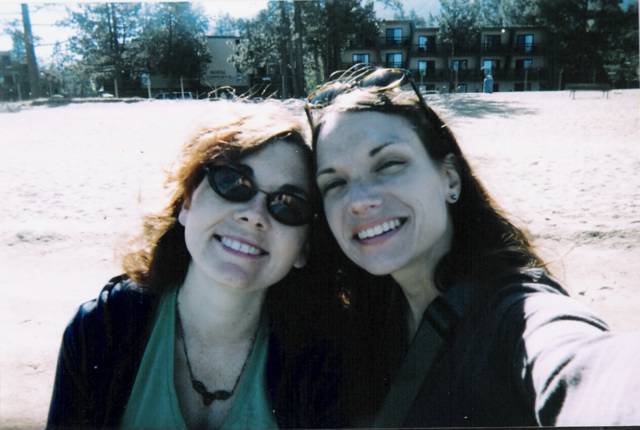

Words
There are two sets of words I'm trying to keep in mind these days.
First, supposedly from Winston Churchill: "When you're going through hell, keep going."
And second, from myself, circa December 7, 2001:
[Pause]
And the world does indeed start to shake beneath your feet. When it stops, you find things around you slightly changed, although you can't say that anything's either remarkably better or remarkably worse. But when things inside you start shaking, too, you need to stop, look around, remember this: the soft thrill of walking in the newly sunny streets of a San Francisco morning. Or this: how full you feel when you're surrounded by your friends and laughing. And this: how every one of the experiences you've had this year, however brilliant or awful or gut-wrenching, has made you stronger, and has had something precious to teach.
First, supposedly from Winston Churchill: "When you're going through hell, keep going."
And second, from myself, circa December 7, 2001:
[Pause]
And the world does indeed start to shake beneath your feet. When it stops, you find things around you slightly changed, although you can't say that anything's either remarkably better or remarkably worse. But when things inside you start shaking, too, you need to stop, look around, remember this: the soft thrill of walking in the newly sunny streets of a San Francisco morning. Or this: how full you feel when you're surrounded by your friends and laughing. And this: how every one of the experiences you've had this year, however brilliant or awful or gut-wrenching, has made you stronger, and has had something precious to teach.
11.09.2004
From the flames
Earlier this year, while casting about for a better employment situation, I applied for a position with another division of Microsoft, and went up to Redmond for a series of interviews with the product team.
My interview with the team manager took place over lunch at a Thai restaurant in a strip mall. After the meal, the manager mentioned that the restaurant we'd just visited used to be a few doors down, in the center of the strip rather than at the end; it had moved, she said, after a car had plowed through its front window and caused a great deal of destruction. The good news, she said, was that the restaurant's business was markedly better in the new location than it had been previously.
She then mentioned a study she'd read about that focused on the victims of a wildfire in the Los Angeles area. In one neighborhood, all of the homes had been destroyed, with the exception of one that was spared because the owner sprayed it with his hose while the fire blazed. A few years later, researchers checked in with the residents of the neighborhood to measure their levels of happiness and satisfaction with their lives; their findings suggested that almost to a person, the residents were happier and more content than they had been before the fire. The one exception was the man who'd saved his house; he exhibited more stress and less contentment.
It goes to show, the manager said, that sometimes you need to let the upheavals in life be not just annoyances and disappointments, but pathways to better things.
So I'll try. Because what else can I do? When what you've known and loved meets the front grill of a rapidly moving car or the flames of a wildfire, you can either stand around and rue the destruction or you can pick up the pieces and rebuild. For the sake of strength and sanity, I need to choose the latter and hope that from the broken glass, from the ashes, I'll pick myself up again.
My interview with the team manager took place over lunch at a Thai restaurant in a strip mall. After the meal, the manager mentioned that the restaurant we'd just visited used to be a few doors down, in the center of the strip rather than at the end; it had moved, she said, after a car had plowed through its front window and caused a great deal of destruction. The good news, she said, was that the restaurant's business was markedly better in the new location than it had been previously.
She then mentioned a study she'd read about that focused on the victims of a wildfire in the Los Angeles area. In one neighborhood, all of the homes had been destroyed, with the exception of one that was spared because the owner sprayed it with his hose while the fire blazed. A few years later, researchers checked in with the residents of the neighborhood to measure their levels of happiness and satisfaction with their lives; their findings suggested that almost to a person, the residents were happier and more content than they had been before the fire. The one exception was the man who'd saved his house; he exhibited more stress and less contentment.
It goes to show, the manager said, that sometimes you need to let the upheavals in life be not just annoyances and disappointments, but pathways to better things.
So I'll try. Because what else can I do? When what you've known and loved meets the front grill of a rapidly moving car or the flames of a wildfire, you can either stand around and rue the destruction or you can pick up the pieces and rebuild. For the sake of strength and sanity, I need to choose the latter and hope that from the broken glass, from the ashes, I'll pick myself up again.
11.08.2004
11.03.2004
Goodbye to all that
It's hard to see your country attacked from without--what Pearl Harbor must've been like, or what 9/11 was--but it's harder by far, I think, and worlds more painful, to see it implode from within.
Were I a stronger person, or one who feels things less keenly, I might be able to stick around for the next four years and watch as the poor get poorer, watch as bigotry and intolerance get written ever more deeply into our laws, watch as FDR's New Deal gets dismantled piece by precious piece, watch as the decision to ignore the separation of church and state that is written into our Constitution becomes ever more willful and widespread. But I can't.
This election year, Dad, you must admit that I'm right: Richard Linklater nailed it when he said, "Withdrawl in disgust is not the same as apathy." In fact, they're worlds apart: if I were apathetic, it would make it so much easier to stay and watch as the US becomes a wasteland of fear, intolerance, and destruction. As it happens, I feel things much too strongly to believe I can stay without either losing my mind or watching some crucial part of myself shrivel and die.
So withdrawal in disgust it will be. O Canada, for all your imperfections, for your distinctly un-San Franciscan weather, for your own political uncertainties, here's hoping you have what my homeland no longer does: a place for people like me.
Were I a stronger person, or one who feels things less keenly, I might be able to stick around for the next four years and watch as the poor get poorer, watch as bigotry and intolerance get written ever more deeply into our laws, watch as FDR's New Deal gets dismantled piece by precious piece, watch as the decision to ignore the separation of church and state that is written into our Constitution becomes ever more willful and widespread. But I can't.
This election year, Dad, you must admit that I'm right: Richard Linklater nailed it when he said, "Withdrawl in disgust is not the same as apathy." In fact, they're worlds apart: if I were apathetic, it would make it so much easier to stay and watch as the US becomes a wasteland of fear, intolerance, and destruction. As it happens, I feel things much too strongly to believe I can stay without either losing my mind or watching some crucial part of myself shrivel and die.
So withdrawal in disgust it will be. O Canada, for all your imperfections, for your distinctly un-San Franciscan weather, for your own political uncertainties, here's hoping you have what my homeland no longer does: a place for people like me.
10.30.2004
An open letter to the rest of the world
Dear fellow residents of the world,
On behalf of all of us Americans who will vote for John Kerry--or the Libertarian party candidate, or Nader, or even the guy who's running on the Prohibition party ticket--please know that we are as chagrined at the possibility of four more years under the Bush regime as you are.
Know that if things go horribly awry this coming Tuesday and somehow a majority of the voting American populace gets suddenly struck dumb and votes for Dubya, we will be holding our heads in our hands and cursing repeatedly, just like you.
Know that, should Bush and Co. somehow find their way back into the White House, we have only the solace of knowing that we did what we could to fight against the fear-mongering and regulated intolerance and utter hatred of the poor that are the hallmarks of Bush's campaign. We tried. Boy did we try.
Finally, if we should find ourselves once again relegated to four years of hell, many of us may try to show up at your nations' doorsteps, desperate for the measures of civility your countries offer that ours no longer seems to. Should you hear us knocking, please consider, strongly consider, letting us in. You could be our salvation.
Here's hoping that our fellow countryfolks will come to see, if they haven't already, that whatever his flaws, Kerry is the far better candidate (unless you happen to be a billionaire, an oilman, or a defense contractor). Here's hoping our worrying comes to naught. Here's hoping next January will see a new and better man at 1600 Pennsylvania Avenue. But please remember that if all of these hopes are dashed, we're not all to blame, and we'll need your understanding, forgiveness, and open arms more than ever.
Yours truly,
All the Americans Hoping for Reprieve
On behalf of all of us Americans who will vote for John Kerry--or the Libertarian party candidate, or Nader, or even the guy who's running on the Prohibition party ticket--please know that we are as chagrined at the possibility of four more years under the Bush regime as you are.
Know that if things go horribly awry this coming Tuesday and somehow a majority of the voting American populace gets suddenly struck dumb and votes for Dubya, we will be holding our heads in our hands and cursing repeatedly, just like you.
Know that, should Bush and Co. somehow find their way back into the White House, we have only the solace of knowing that we did what we could to fight against the fear-mongering and regulated intolerance and utter hatred of the poor that are the hallmarks of Bush's campaign. We tried. Boy did we try.
Finally, if we should find ourselves once again relegated to four years of hell, many of us may try to show up at your nations' doorsteps, desperate for the measures of civility your countries offer that ours no longer seems to. Should you hear us knocking, please consider, strongly consider, letting us in. You could be our salvation.
Here's hoping that our fellow countryfolks will come to see, if they haven't already, that whatever his flaws, Kerry is the far better candidate (unless you happen to be a billionaire, an oilman, or a defense contractor). Here's hoping our worrying comes to naught. Here's hoping next January will see a new and better man at 1600 Pennsylvania Avenue. But please remember that if all of these hopes are dashed, we're not all to blame, and we'll need your understanding, forgiveness, and open arms more than ever.
Yours truly,
All the Americans Hoping for Reprieve
9.30.2004
Non-Fatal Errors
My article on error messages is one of the features on Writers UA (aka WinWriters) this month. It's gratifying that what began as an annoyance (i.e., bad error messages) has grown into an STC conference presentation, an article in the Proceedings, and an online feature. I got some really positive feedback on my conference session earlier this year, and I'm hoping to have the chance to give it again sometime.
9.26.2004
Boylan's Seltzer Mon Amour
After several months of serious frugality (all funds going either to rent or to the business), I've started to allow myself a few indulgences here and there--a burrito from Mariachi's, a two-pound bag of almonds, coffee that costs more than $4.50 a pound. My current favorite splurge is Boylan's seltzer, which I stumbled upon in Fog City News last week. (I resisted the urge to buy foreign chocolate while there; I'm not yet feeling quite that flush.)
The seltzer itself is great--the text on the bottle promising "pin-point carbonation" isn't lying--but I'm especially smitten with the bottles. They're embossed glass with painted-on labels: blue for plain, green for lime, orange for, well, orange. If you ignore the bar code, Nutrition Facts label, and little pink distribution stamp, you'd think the bottles came straight out of 1955. They're delectibly unlike anything else on the market, and for that reason alone are worthy of decorating my kitchen windowsill.
They're also more than $1 a pop, which means I'll need to reign in my consumption sooner or later, especially as rent will soon be due. But for now, I'll enjoy the bottle of orange I've just opened as I sit down to watch the DVD I borrowed--for free!--from the library. Priceless.
The seltzer itself is great--the text on the bottle promising "pin-point carbonation" isn't lying--but I'm especially smitten with the bottles. They're embossed glass with painted-on labels: blue for plain, green for lime, orange for, well, orange. If you ignore the bar code, Nutrition Facts label, and little pink distribution stamp, you'd think the bottles came straight out of 1955. They're delectibly unlike anything else on the market, and for that reason alone are worthy of decorating my kitchen windowsill.
They're also more than $1 a pop, which means I'll need to reign in my consumption sooner or later, especially as rent will soon be due. But for now, I'll enjoy the bottle of orange I've just opened as I sit down to watch the DVD I borrowed--for free!--from the library. Priceless.
9.21.2004
Through the Valley
Powell's Books, in honor of their Web site's 10th anniversary, ran a contest in which people were asked to submit an essay on the most memorable reading experience they've had in the past ten years. The winner (of 25 finalists) gets $1000 worth of books; ten runners-up get $100 worth of books. For each essay submitted to the contest, Powell's donated $1 to Reading Is Fundamental.
The finalists were announced today (in the form of essays posted to the Web site, which readers are invited to vote on), and though I felt a twang of disappointment that I'm not one of them (such hopes, I know, but they're kind of inevitable), that eventually melted into being thankful I took the time to write an essay in the first place. It's not often I write about reading, so doing just that was a nice departure from the norm.
My essay is below. It's called Through the Valley, and it's about reading Douglas Coupland's Microserfs twice. (If you haven't read Microserfs, maybe it's time you went down to your local bookstore and picked it up. Or ordered a copy from Powell's.)
So here it is.
Before I knew what Sand Hill Road, Draeger’s, and CalTrain were, before I had seen the city that would soon become my home, and long before I imagined I’d ever work for the company the book portrayed, I stood in a suburban Boston kitchen in the winter of 1997, reading the final chapter of Douglas Coupland’s Microserfs, struck momentarily dumb with tears.
I was teary at the blow delivered to Daniel, the main character, in the form of a stroke that leaves his mother speechless, immobile, and unresponsive. I cried, too, at the sweetness of the attempts Daniel and his friends make to bring Mrs. U back into the world. Karla massages her slack flesh, and teaches Dan and his father to do the same; Bug reads her the Sunday comics, complete with a running commentary on which ones he finds unfunny; Dusty and Todd demonstrate stretches and make plans for physical therapy.
But mostly I cried at Mrs. Underwood’s resurfacing by means of a computer, which Michael guides her to use as a way of speaking. The computer, which for much of the story helps keep the characters shuttered in their own small worlds, is what finally brings Dan’s mother back.
A few years later, partway into a stint with a Silicon Valley start-up, I picked up the book again to occupy the slivers of time I had at lunch, on weekends, and before bed. This time around, it read like a new story. I understood the Northern California references (well enough, even, to note a few factual “bugs”); I knew people with the same personalities and foibles as some of the book’s characters; and, like Daniel and his friends, I had felt the dulling effects of too many hours in front of a computer screen, too much time in traffic on the 101, too little daylight.
Reading the book a second time, I knew the last chapter—the one that made me sniffly in my wintry East coast kitchen—would hit me again, but I didn’t know that this time I’d be teary not just at the poignancy of the scene, but also with recognition, and with hope.
Because this time I understood that Coupland got it right: for those of us working or living in the Valley, although the Internet boom and bust had built up and wrecked so much, and though cars and office parks and cubicles had become the centers of our days, there was still plenty of life to be found in us.
To find it, we just had to believe that that life was there somewhere, and believe that, somehow, like the Microserfs characters trying to pull Mrs. Underwood to the surface, we could get at it. When we did—when, like Dan and his friends, we saw the signs of it, like Mrs. U’s words flashing into being onscreen—we’d understand that there’s something far stronger than markets or bubbles or code, something that even endless days of work can’t strangle, something that does not easily flicker out.
At the end of the story, as Daniel watches the laser pointer light show his friends put on for his mom in the Silicon Valley night, he thinks “about us…these children who fell down cartoon holes…dreamless children, alive but not living—we emerged on the other side of the cartoon holes fully awake and discovered we were whole.”
This time I cried because I knew I had fallen, too, and because I knew I would eventually fall out of that rabbit hole, out of the Valley’s living sleep.
I closed the book and for a long time I willed myself to keep falling. For months, I fell: through a job I liked less and less, through a commute I could no longer stand, through a mood grown overwhelmingly sour.
I fell until I, too, emerged from my hole; until I woke up the part of myself that had been buried by work and traffic and stress; until, like Mrs. U, I could truthfully say, in 36-point Helvetica, i am here.
The finalists were announced today (in the form of essays posted to the Web site, which readers are invited to vote on), and though I felt a twang of disappointment that I'm not one of them (such hopes, I know, but they're kind of inevitable), that eventually melted into being thankful I took the time to write an essay in the first place. It's not often I write about reading, so doing just that was a nice departure from the norm.
My essay is below. It's called Through the Valley, and it's about reading Douglas Coupland's Microserfs twice. (If you haven't read Microserfs, maybe it's time you went down to your local bookstore and picked it up. Or ordered a copy from Powell's.)
So here it is.
Before I knew what Sand Hill Road, Draeger’s, and CalTrain were, before I had seen the city that would soon become my home, and long before I imagined I’d ever work for the company the book portrayed, I stood in a suburban Boston kitchen in the winter of 1997, reading the final chapter of Douglas Coupland’s Microserfs, struck momentarily dumb with tears.
I was teary at the blow delivered to Daniel, the main character, in the form of a stroke that leaves his mother speechless, immobile, and unresponsive. I cried, too, at the sweetness of the attempts Daniel and his friends make to bring Mrs. U back into the world. Karla massages her slack flesh, and teaches Dan and his father to do the same; Bug reads her the Sunday comics, complete with a running commentary on which ones he finds unfunny; Dusty and Todd demonstrate stretches and make plans for physical therapy.
But mostly I cried at Mrs. Underwood’s resurfacing by means of a computer, which Michael guides her to use as a way of speaking. The computer, which for much of the story helps keep the characters shuttered in their own small worlds, is what finally brings Dan’s mother back.
A few years later, partway into a stint with a Silicon Valley start-up, I picked up the book again to occupy the slivers of time I had at lunch, on weekends, and before bed. This time around, it read like a new story. I understood the Northern California references (well enough, even, to note a few factual “bugs”); I knew people with the same personalities and foibles as some of the book’s characters; and, like Daniel and his friends, I had felt the dulling effects of too many hours in front of a computer screen, too much time in traffic on the 101, too little daylight.
Reading the book a second time, I knew the last chapter—the one that made me sniffly in my wintry East coast kitchen—would hit me again, but I didn’t know that this time I’d be teary not just at the poignancy of the scene, but also with recognition, and with hope.
Because this time I understood that Coupland got it right: for those of us working or living in the Valley, although the Internet boom and bust had built up and wrecked so much, and though cars and office parks and cubicles had become the centers of our days, there was still plenty of life to be found in us.
To find it, we just had to believe that that life was there somewhere, and believe that, somehow, like the Microserfs characters trying to pull Mrs. Underwood to the surface, we could get at it. When we did—when, like Dan and his friends, we saw the signs of it, like Mrs. U’s words flashing into being onscreen—we’d understand that there’s something far stronger than markets or bubbles or code, something that even endless days of work can’t strangle, something that does not easily flicker out.
At the end of the story, as Daniel watches the laser pointer light show his friends put on for his mom in the Silicon Valley night, he thinks “about us…these children who fell down cartoon holes…dreamless children, alive but not living—we emerged on the other side of the cartoon holes fully awake and discovered we were whole.”
This time I cried because I knew I had fallen, too, and because I knew I would eventually fall out of that rabbit hole, out of the Valley’s living sleep.
I closed the book and for a long time I willed myself to keep falling. For months, I fell: through a job I liked less and less, through a commute I could no longer stand, through a mood grown overwhelmingly sour.
I fell until I, too, emerged from my hole; until I woke up the part of myself that had been buried by work and traffic and stress; until, like Mrs. U, I could truthfully say, in 36-point Helvetica, i am here.
8.24.2004
8.19.2004
Eastward
Southern Nevada, after several hundred miles, was not fabulous. Nor were stretches of Colorado, most of Kansas, or the oddly long-seeming chunk of Illinois we travelled between St. Louis and Kentucky.
Monique's car was stuffed to the hilt, with just enough space in the backseat to afford a view out the rear windshield and side windows. The side mirror on the passenger side spent most of the journey doing its best to fall off completely (despite our ministrations with duct tape and pleading), and the back end of the car rode perilously close to the ground.
I won't even mention the food we had to endure for much of the trip, being unwelcome vegetarians in very non-vegetarian lands.
But overall, the trip was amazing. I'm still reeling at the splendor of southern Utah, with its otherworldy landscape racing along with I-70. I'm in love with little Paonia, Colorado, site of our first really good meal in hundreds of miles. I'm amazed that we actually stayed and ate in Frank Lloyd Wright's Price Tower in Bartlesville, Oklahoma, and I'm so happy that I was able to find my way back to the Mad Platter in Nashville for another awesome meal there.
It was somewhere just east of Asheville, coming down the mountains with a madly beautiful sunset behind us and Winston-Salem somewhere ahead, that I thought again of the maxim I'd seen once in a snowboarding ad: "The more you live, the less you die." And I thought, what could've been a straightforward drive from California to North Carolina became so much more because we were willing to go astray and take some chances with our itinerary.
Isn't that always the key, though--turning away from the path? That practice can be anything from mildly inconvenient to a wild pain in the ass sometimes, and it isn't worth it every single time, but in the end it leaves you with a balance sheet with much more in the black column than the red.
That, to me, is worth driving for.
Monique's car was stuffed to the hilt, with just enough space in the backseat to afford a view out the rear windshield and side windows. The side mirror on the passenger side spent most of the journey doing its best to fall off completely (despite our ministrations with duct tape and pleading), and the back end of the car rode perilously close to the ground.
I won't even mention the food we had to endure for much of the trip, being unwelcome vegetarians in very non-vegetarian lands.
But overall, the trip was amazing. I'm still reeling at the splendor of southern Utah, with its otherworldy landscape racing along with I-70. I'm in love with little Paonia, Colorado, site of our first really good meal in hundreds of miles. I'm amazed that we actually stayed and ate in Frank Lloyd Wright's Price Tower in Bartlesville, Oklahoma, and I'm so happy that I was able to find my way back to the Mad Platter in Nashville for another awesome meal there.
It was somewhere just east of Asheville, coming down the mountains with a madly beautiful sunset behind us and Winston-Salem somewhere ahead, that I thought again of the maxim I'd seen once in a snowboarding ad: "The more you live, the less you die." And I thought, what could've been a straightforward drive from California to North Carolina became so much more because we were willing to go astray and take some chances with our itinerary.
Isn't that always the key, though--turning away from the path? That practice can be anything from mildly inconvenient to a wild pain in the ass sometimes, and it isn't worth it every single time, but in the end it leaves you with a balance sheet with much more in the black column than the red.
That, to me, is worth driving for.
7.05.2004
Self-evident
When was the last time you read the Declaration of Independence? Until this morning, I hadn't looked at the thing closely for years--perhaps since seventh-grade history. But there it was, on the back page of yesterday's Week in Review section of the Times, so I spent some time digging in to our history.
Here's the weird thing: I don't know whether the Declaration was placed there by the Times staff or whether it was an uncredited ad, but it read to me like a litany of the destruction wrought by the Bush Administration. Perhaps that sounds ridiculous--and I certainly don't mean to imply that things are as bad now as they were when the colonists were living under tyrannical rule 228 years ago. But consider the examples given as "Facts submitted to a candid world" of "a history of repeated injuries and usurpations, all having in direct object the establishment of an absolute Tyranny over these States":
"He has erected a multitude of New Offices, and sent hither swarms of Officers to harrass our People; and eat out their substance";
"He has affected to render the Military independent of and superior to the Civil power";
"He has combined with others to subject us to a jurisdiction foreign to our constitution, and unacknowledged by our laws; giving his Assent to their Acts of pretended Legislation...."
There are not, of course, direct and absolute corollaries between then and now, but the similarities are striking. Can it actually be that we're moving backwards through history, and will, if we fail to act, find ourselves perilously closer to 1776 by 2008?
Though Bush and his allies would surely write me off as unpatriotic (and an America hater, and a terrorist lover, and what have you) for saying this, it needs to be said: the Founding Fathers and Mothers of the country did what they could to ensure we wouldn't wind up with another King George tyrannizing us without our consent, but their actions can only take us so far.
It's up to us now to be sure we don't wind up with another King George tyrannizing us with our consent, or with the consent of a minority or the ruling of a skewed Supreme Court. We have the chance for our own revolution, and in honor of everyone from Button Gwinnett to Matthew Thornton, we need to take it.
Here's the weird thing: I don't know whether the Declaration was placed there by the Times staff or whether it was an uncredited ad, but it read to me like a litany of the destruction wrought by the Bush Administration. Perhaps that sounds ridiculous--and I certainly don't mean to imply that things are as bad now as they were when the colonists were living under tyrannical rule 228 years ago. But consider the examples given as "Facts submitted to a candid world" of "a history of repeated injuries and usurpations, all having in direct object the establishment of an absolute Tyranny over these States":
"He has erected a multitude of New Offices, and sent hither swarms of Officers to harrass our People; and eat out their substance";
"He has affected to render the Military independent of and superior to the Civil power";
"He has combined with others to subject us to a jurisdiction foreign to our constitution, and unacknowledged by our laws; giving his Assent to their Acts of pretended Legislation...."
There are not, of course, direct and absolute corollaries between then and now, but the similarities are striking. Can it actually be that we're moving backwards through history, and will, if we fail to act, find ourselves perilously closer to 1776 by 2008?
Though Bush and his allies would surely write me off as unpatriotic (and an America hater, and a terrorist lover, and what have you) for saying this, it needs to be said: the Founding Fathers and Mothers of the country did what they could to ensure we wouldn't wind up with another King George tyrannizing us without our consent, but their actions can only take us so far.
It's up to us now to be sure we don't wind up with another King George tyrannizing us with our consent, or with the consent of a minority or the ruling of a skewed Supreme Court. We have the chance for our own revolution, and in honor of everyone from Button Gwinnett to Matthew Thornton, we need to take it.
6.30.2004
The reason
Scene: SF MoMA atrium, 7.15 p.m., exhibit opening/reception
Woman (to bartender): Hey, I know why you don't serve red wine. It's because you're afraid people will spill it, isn't it?
Bartender: No, we just don't serve it until 8. [No further explanation.]
Em (internally): No! I know why! It's because Dana tried to steal that bottle of red wine after that IFFCON event, and it ended up smashed and running all over the atrium floor. Surely the MoMA event people haven't forgotten that one.
...And that makes me think of our Deadpan days, and how I used to be able to summon the energy to go out and drink at least three nights a week, then get up at 5.30 in the morning to go to work. How? I have no idea. It actually amazes me now, that youthful vigor and liver strength. How did it manage to dissipate so completely in 5 years?
Woman (to bartender): Hey, I know why you don't serve red wine. It's because you're afraid people will spill it, isn't it?
Bartender: No, we just don't serve it until 8. [No further explanation.]
Em (internally): No! I know why! It's because Dana tried to steal that bottle of red wine after that IFFCON event, and it ended up smashed and running all over the atrium floor. Surely the MoMA event people haven't forgotten that one.
...And that makes me think of our Deadpan days, and how I used to be able to summon the energy to go out and drink at least three nights a week, then get up at 5.30 in the morning to go to work. How? I have no idea. It actually amazes me now, that youthful vigor and liver strength. How did it manage to dissipate so completely in 5 years?
6.28.2004
Addiction
Curse you, Melissa, for sending me that invitation to join orkut. I accepted it, and now I have fallen into the rabbit hole of endlessly searching for new communities (Canada! Vassar! Simple Living! Road Trips! Bush is stupid!), trying to determine how many people I know are fellow orkut-ites (thus far: not many), and generally spending way, way too much time on one site.
True, orkut is somewhat like Friendster writ slightly older, slightly geekier, and slightly more exclusive, but it still seems like a fascinating and totally new world. It does have its mysteries (seriously, why so many Brazilians and so many Portuguese-language communities?) and its usability flaws (why can't I search for a community or topic like I can for a person? why can't I filter communities by something other than popularity and newness? what is with the whole crazy colored arrow/rate-your-friends thing?); regardless, it's a seriously cool invention, and is sure to become one of my very favorite time wasters. I have only Melissa to thank.
True, orkut is somewhat like Friendster writ slightly older, slightly geekier, and slightly more exclusive, but it still seems like a fascinating and totally new world. It does have its mysteries (seriously, why so many Brazilians and so many Portuguese-language communities?) and its usability flaws (why can't I search for a community or topic like I can for a person? why can't I filter communities by something other than popularity and newness? what is with the whole crazy colored arrow/rate-your-friends thing?); regardless, it's a seriously cool invention, and is sure to become one of my very favorite time wasters. I have only Melissa to thank.
6.06.2004
Revisionism
As much as I may think his politics were heart-stoppingly, woefully, pathetically simplistic and wrong, I can't claim to actually be happy that Ronald Reagan is dead. He was, in the end, a human, and one suffering a fate no one should have to suffer.
But I'm terrified that the American populace--media and citizens alike--will continue to fall prey to the strains of revisionist history we've seen a bit of over the past 36 hours. Yes, Reagan may have brought a renewed sense of optimism to a country reeling from inflation, unemployment, and general malaise in the early 80s. And yes, he may have had a spectacular and unfailing sense of humor.
But how can those things make up for the fact that he slashed government spending so deeply and severely that unemployment rose, the poor got much poorer, and those who had not previously been poor found themselves thus? How can they make up for the sickening scandal of Iran contra, full of lies? And how can they make up for Reagan's staunch refusal to acknowledge the scourge of AIDS until the epidemic had swelled and exploded?
In the film version of "And the Band Played On," titles appear sporadically with a running tally of the AIDS cases diagnosed, and the number of victims already dead, while the US government did almost nothing to intervene. In Randy Shilts' book, he devotes an entire chapter of the Epilogue to May 31, 1987, the day of the first speech Reagan gave on the AIDS epidemic.
Shilts writes, "By the time President Reagan had delivered his first speech on the epidemic of Acquired Immune Deficiency Syndrome, 36,058 Americans had been diagnosed with the disease; 20,849 had died."
Reagan had refused to acknowledge AIDS because he (along with many others at the time) viewed it as a disease that affected only gay men. In the President's estimation, gay men's lives weren't worth the federal funding it would take to research AIDS and its treatment. Of course, well before 1987, the disease had spread to other populations (including thousands who contracted it through blood transfusions, rather than any sort of risky behavior), so it wasn't only gays who suffered from Reagan's intolerance and disregard.
In the rush to lionize Ronald Reagan as an American hero, we must not forget that he was complicit in the deaths of over 20,000 people in his own country while he was in office. His own suffering, and our sympathy towards it, should not blind us to the fact that his bigotry contributed to the continued suffering of tens of thousands of others. He had the chance again and again to show the American people that he could rise above the forces of homophobia, misinformation, and hatred masked as morality; again and again, he failed to take that chance.
We have the chance now to remember Reagan not only as he was in his final years--frail, quiet, lost in a disease no one deserves--or in his Hollywood years, but also as he truly was in his White House years. We also have the chance to remember the thousands of other lives--more prosaic, perhaps, but no less valuable--lost to complications from AIDS while, throughout the 1980s, and with Reagan wielding the baton, the band played on.
But I'm terrified that the American populace--media and citizens alike--will continue to fall prey to the strains of revisionist history we've seen a bit of over the past 36 hours. Yes, Reagan may have brought a renewed sense of optimism to a country reeling from inflation, unemployment, and general malaise in the early 80s. And yes, he may have had a spectacular and unfailing sense of humor.
But how can those things make up for the fact that he slashed government spending so deeply and severely that unemployment rose, the poor got much poorer, and those who had not previously been poor found themselves thus? How can they make up for the sickening scandal of Iran contra, full of lies? And how can they make up for Reagan's staunch refusal to acknowledge the scourge of AIDS until the epidemic had swelled and exploded?
In the film version of "And the Band Played On," titles appear sporadically with a running tally of the AIDS cases diagnosed, and the number of victims already dead, while the US government did almost nothing to intervene. In Randy Shilts' book, he devotes an entire chapter of the Epilogue to May 31, 1987, the day of the first speech Reagan gave on the AIDS epidemic.
Shilts writes, "By the time President Reagan had delivered his first speech on the epidemic of Acquired Immune Deficiency Syndrome, 36,058 Americans had been diagnosed with the disease; 20,849 had died."
Reagan had refused to acknowledge AIDS because he (along with many others at the time) viewed it as a disease that affected only gay men. In the President's estimation, gay men's lives weren't worth the federal funding it would take to research AIDS and its treatment. Of course, well before 1987, the disease had spread to other populations (including thousands who contracted it through blood transfusions, rather than any sort of risky behavior), so it wasn't only gays who suffered from Reagan's intolerance and disregard.
In the rush to lionize Ronald Reagan as an American hero, we must not forget that he was complicit in the deaths of over 20,000 people in his own country while he was in office. His own suffering, and our sympathy towards it, should not blind us to the fact that his bigotry contributed to the continued suffering of tens of thousands of others. He had the chance again and again to show the American people that he could rise above the forces of homophobia, misinformation, and hatred masked as morality; again and again, he failed to take that chance.
We have the chance now to remember Reagan not only as he was in his final years--frail, quiet, lost in a disease no one deserves--or in his Hollywood years, but also as he truly was in his White House years. We also have the chance to remember the thousands of other lives--more prosaic, perhaps, but no less valuable--lost to complications from AIDS while, throughout the 1980s, and with Reagan wielding the baton, the band played on.
4.09.2004
The Organized Life
It's one of those cases in which not getting what you think you want makes you realize you didn't really want it all that much in the first place, and forces you to sit yourself down and figure out what the hell it is you do in fact want, which comes to you in a flash.
You know, like when you interview for a job with another workgroup within your company, based in a different state, and it seems on the surface like the perfect position, despite the implicit uprooting of your life and all that would entail; when the call announcing that you didn't in fact land the job fills you with what can only be described as sweet, lightening relief, as you realize that, quite probably, things wouldn't have been much--if any--better; when you lurk in the Employment section of the local bookstore until you find a sufficiently substantial tome that will help you decide What to Do with Your Life, which you then take home and read; and when something you pick up from the book, combined with an article in a newsletter you've just read and something rushing up from your subconscious makes you realize that you must quit your job, leave the field of technical writing, and strike out on your own as a professional organizer.
And what else can you do but take that realization and run with it, until you have ingested a dizzying array of business facts and requirements, until you've taken concrete steps to make this all real, until you've finally reached a point at which you can rest for a moment, and look around to see that you are in fact somewhere else, somewhere much closer to where you want to be and much farther from what you need to get away from.
That brings you to the Organized Life.
You know, like when you interview for a job with another workgroup within your company, based in a different state, and it seems on the surface like the perfect position, despite the implicit uprooting of your life and all that would entail; when the call announcing that you didn't in fact land the job fills you with what can only be described as sweet, lightening relief, as you realize that, quite probably, things wouldn't have been much--if any--better; when you lurk in the Employment section of the local bookstore until you find a sufficiently substantial tome that will help you decide What to Do with Your Life, which you then take home and read; and when something you pick up from the book, combined with an article in a newsletter you've just read and something rushing up from your subconscious makes you realize that you must quit your job, leave the field of technical writing, and strike out on your own as a professional organizer.
And what else can you do but take that realization and run with it, until you have ingested a dizzying array of business facts and requirements, until you've taken concrete steps to make this all real, until you've finally reached a point at which you can rest for a moment, and look around to see that you are in fact somewhere else, somewhere much closer to where you want to be and much farther from what you need to get away from.
That brings you to the Organized Life.

2.15.2004
On Capturing the Friedmans
Andrew Jarecki's Capturing the Friedmans is a damning portrait, to varying degrees, of almost all of its characters. The film is both An American Family writ large (and much uglier) and a story of what may have been a horrific case of sexual abuse.
Did Arnold Friedman and his son Jesse in fact molest the boys who attended computer classes in the Friedmans' basement? Jarecki won't (and perhaps can't, because of his lack of certainty) say. But his exhaustive presentation of both sides of the story is both painful to watch and immensely compelling.
What to think of the judge who presided over Arnold and Jesse's case, and who declares in the film, "There was never a doubt in my mind about their guilt" (referring, disturbingly, to her thoughts before the case even began)? Or of the sex crimes unit detective with the Great Neck police department whose methods of questioning the possible victims in the case can be described as leading at best?
Jarecki leaves no room to question Arnold's guilt as a pedophile--he was indeed convicted of possession of child pornography, admitted in an affidavit to having molested the son of a friend (and perhaps another boy as well), and, according to Jesse's lawyer, may indeed have molested his youngest son for years. But Jarecki leaves room for the doubts that came up in the case--did Arnold and Jesse actually commit the acts for which they were both sent to prison?
As brilliant as the even-handed presentation of the two sides of the case is the director's decision to allow the Friedmans' home movies to serve as the centerpiece of the film. It's these glimpses into the family's lives that complicate the case even further.
Jarecki could easily have created a film that listed strongly to one side, with occasional glimpses of the opposite pole, but he chose instead to make something much richer and more interesting: a chronicle of one family's dysfunction, one community's scandal and outrage, and the one breed of crime that may be every parent's largest and most unwieldy fears.
Did Arnold Friedman and his son Jesse in fact molest the boys who attended computer classes in the Friedmans' basement? Jarecki won't (and perhaps can't, because of his lack of certainty) say. But his exhaustive presentation of both sides of the story is both painful to watch and immensely compelling.
What to think of the judge who presided over Arnold and Jesse's case, and who declares in the film, "There was never a doubt in my mind about their guilt" (referring, disturbingly, to her thoughts before the case even began)? Or of the sex crimes unit detective with the Great Neck police department whose methods of questioning the possible victims in the case can be described as leading at best?
Jarecki leaves no room to question Arnold's guilt as a pedophile--he was indeed convicted of possession of child pornography, admitted in an affidavit to having molested the son of a friend (and perhaps another boy as well), and, according to Jesse's lawyer, may indeed have molested his youngest son for years. But Jarecki leaves room for the doubts that came up in the case--did Arnold and Jesse actually commit the acts for which they were both sent to prison?
As brilliant as the even-handed presentation of the two sides of the case is the director's decision to allow the Friedmans' home movies to serve as the centerpiece of the film. It's these glimpses into the family's lives that complicate the case even further.
Jarecki could easily have created a film that listed strongly to one side, with occasional glimpses of the opposite pole, but he chose instead to make something much richer and more interesting: a chronicle of one family's dysfunction, one community's scandal and outrage, and the one breed of crime that may be every parent's largest and most unwieldy fears.
2.01.2004
A thanksgiving
Thanks be to Monique for convincing me to leave the comfort and warmth of my bedroom on that damp and chilly night to go out for what began as just one drink.
Thanks be to Val and Isaac for choosing the Hush Hush in the first place.
Thanks be to Jerry for showing up with his tall, quiet friend in tow, introducing said friend to us, and then taking off for the dj booth, leaving us to entertain.
And thanks, most of all, be to that tall quiet man, for putting up with the advanced tipsiness of our little group, for making us laugh with fabricated stories of Edmonton's Scandinavian population, for letting me un-subtly rest my hand on his knee, and for later walking with me out of the Hush Hush, toward my house, toward what would become, three years later, something neither of us imagined then it could be.
Thanks be to Val and Isaac for choosing the Hush Hush in the first place.
Thanks be to Jerry for showing up with his tall, quiet friend in tow, introducing said friend to us, and then taking off for the dj booth, leaving us to entertain.
And thanks, most of all, be to that tall quiet man, for putting up with the advanced tipsiness of our little group, for making us laugh with fabricated stories of Edmonton's Scandinavian population, for letting me un-subtly rest my hand on his knee, and for later walking with me out of the Hush Hush, toward my house, toward what would become, three years later, something neither of us imagined then it could be.
1.18.2004
Notes from an island nation
Val has started a blog to chronicle the adventures she and Isaac are having in Japan. The impish part of me can't help but be junior high-ishly gleeful at the fact that the $400 per month ryokan house they found on the Internet (read: sight unseen), which Kumi warned would be vile despite their protests to the contrary, turned out indeed to be vile.
But I'll let Val describe it:
"Despite the tatami mats on our floor and the kimono hanging in the corner of our room, this place didn't have so much the "traditional Japanese" feel to it as it did the "public housing project in Beijing" vibe--to reach the bathroom, you walked down a cold concrete corridor lit by bug-dimmed fluorescent lights, and once there, squatted over a ceramic hole in a room filled with dirty mops; showering took place in the grease-spattered communal kitchen."
Mmmm. Just makes me wonder what the Web site through which they booked this place could've possibly said to mask that degree of grossness. Also makes me wonder whether Val and Isaac will ever again use the Internet to book long-term housing.
But they've moved to another boarding house in the city, and seem to be doing well, despite the cold weather, unheated hallways and bathroom of their accommodations, unfilling and seriously expensive food, and uncertain job prospects. More power to them for allowing cute schoolkids and generally kind people be enough to outweigh living conditions that would send me packing faster than the flush of a heated, deodorized, noisemaking toilet.
But I'll let Val describe it:
"Despite the tatami mats on our floor and the kimono hanging in the corner of our room, this place didn't have so much the "traditional Japanese" feel to it as it did the "public housing project in Beijing" vibe--to reach the bathroom, you walked down a cold concrete corridor lit by bug-dimmed fluorescent lights, and once there, squatted over a ceramic hole in a room filled with dirty mops; showering took place in the grease-spattered communal kitchen."
Mmmm. Just makes me wonder what the Web site through which they booked this place could've possibly said to mask that degree of grossness. Also makes me wonder whether Val and Isaac will ever again use the Internet to book long-term housing.
But they've moved to another boarding house in the city, and seem to be doing well, despite the cold weather, unheated hallways and bathroom of their accommodations, unfilling and seriously expensive food, and uncertain job prospects. More power to them for allowing cute schoolkids and generally kind people be enough to outweigh living conditions that would send me packing faster than the flush of a heated, deodorized, noisemaking toilet.
1.15.2004
Elsewhere
It's escapism, to be sure: too many hours spent speeding down and up 280, too many spent modifying the mental balance sheet that will determine when and how I leave my job, too many spent wondering whether I should hike out of San Francisco before I watch the majority of my friends do the same--all of these hours have sent me racing backward in memory to moments I want here, now, again.
I want back those hushed few hours in the Bluebird in Nashville, with beer and bar food and songs alternately hilarious and heartbreaking.
I want back the afternoon of swimming half-naked in the Mediterranean, taking myself farther and farther from shore as J held down our fort among the topless French tourists on the beach.
I want back the end of our hike in Waterton, when the fear of plummeting to my death on scree had passed, when G and I lagged behind to look at the waterfalls at the edge of the trail and make out disgustingly, when the promise of pizza, beer, a shower, and a night in a proper bed with a roof over our heads (and presumably no large mammalian visitors) was close enough to taste.
Weird though it sounds, I want back that evening in late March seven years ago when Monique and I drove out of Kansas and into Oklahoma, into one of the most stupefyingly brilliant sunsets I've ever seen. We stopped by the side of the road so we could take it in and I could take a photo, just sat there for a few minutes in silence. Because darkness was coming quickly and we had somewhere (miles away) to be, we didn't stay long. But those moments are still clear to me now, even several years later, a subtle reminder that the things that can make me feel whole and grounded again are out there somewhere, even in the most unexpected places.
I want back those hushed few hours in the Bluebird in Nashville, with beer and bar food and songs alternately hilarious and heartbreaking.
I want back the afternoon of swimming half-naked in the Mediterranean, taking myself farther and farther from shore as J held down our fort among the topless French tourists on the beach.
I want back the end of our hike in Waterton, when the fear of plummeting to my death on scree had passed, when G and I lagged behind to look at the waterfalls at the edge of the trail and make out disgustingly, when the promise of pizza, beer, a shower, and a night in a proper bed with a roof over our heads (and presumably no large mammalian visitors) was close enough to taste.
Weird though it sounds, I want back that evening in late March seven years ago when Monique and I drove out of Kansas and into Oklahoma, into one of the most stupefyingly brilliant sunsets I've ever seen. We stopped by the side of the road so we could take it in and I could take a photo, just sat there for a few minutes in silence. Because darkness was coming quickly and we had somewhere (miles away) to be, we didn't stay long. But those moments are still clear to me now, even several years later, a subtle reminder that the things that can make me feel whole and grounded again are out there somewhere, even in the most unexpected places.
12.29.2003
Back
I do love Christmas, and I'm always glad to spend it at mom and dad's house, but there's no denying the sweetness of returning to the left coast when the holiday is through.
Because, see, there are only so many heavy, multi-course meals I can eat (the hours between them liberally interspersed with cookies) before I swear I will bust out of my clothes (in the worst possible way). It's nice to have a different route for my runs, but running in cold weather is not something I'm meant to do long-term. And though I love being around my big, crazy family, I do miss my own house, and regular phone chats with the boy (without having to drag the phone to some far corner of the house in search of privacy), and being able to sit and read uninterrupted for hours on end if I want.
So tonight I came back from SFO, went out in the rain to Golden Produce, and returned home with the makings of a dinner that did not feature cheese or butter as its central tenet. I ate in front of the computer. I puttered around more or less aimlessly. I might soon take a bath. While I do miss the fam, and while the past week has left me pleasantly full in every respect, it's lovely to once again be back in the sphere of my life here. It feels deliciously like home.
Because, see, there are only so many heavy, multi-course meals I can eat (the hours between them liberally interspersed with cookies) before I swear I will bust out of my clothes (in the worst possible way). It's nice to have a different route for my runs, but running in cold weather is not something I'm meant to do long-term. And though I love being around my big, crazy family, I do miss my own house, and regular phone chats with the boy (without having to drag the phone to some far corner of the house in search of privacy), and being able to sit and read uninterrupted for hours on end if I want.
So tonight I came back from SFO, went out in the rain to Golden Produce, and returned home with the makings of a dinner that did not feature cheese or butter as its central tenet. I ate in front of the computer. I puttered around more or less aimlessly. I might soon take a bath. While I do miss the fam, and while the past week has left me pleasantly full in every respect, it's lovely to once again be back in the sphere of my life here. It feels deliciously like home.
12.21.2003
Seeing the light
I won't claim to be addicted to electicity, but I will admit to finding it terribly convenient. It was something of a disappointment, then, to find myself at 6.30 last night suddenly in the quiet and dark of a blackout. My holiday party, scheduled to start around 8, seemed more and more doomed as 7 arrived, then 7.30, with no sign of electrical relief.
But thanks to the score of candles I'd gathered earlier (intending to use them even under normal functioning on PG&E's part) and my gas stove and the fact that I was anal enough to do a lot of advance prep, it still seemed feasible to have a party. So I did.
And although it seemed for a while that Monique and I would have a lot of food and alcohol to consume by ourselves, people did trickle in. Then they flowed in, and the house was warm without a heater, and the candles gave us all the light we really needed, and we ate and drank and missed only the lights on my little Christmas tree and, until conversation would've drowned it out anyway, some music. Everything else seemed just as it should be.
About half an hour ago, the power snapped back on, as abrubtly as it had gone off last night, and I'm glad: I can do laundry, and homework, and can stop worrying about setting myself on fire while trying to read the paper by candlelight.
But despite the initial frustration it caused, I'm almost happy the city was powerless last night. Sometimes it's helpful--and, dare I say, enlightening--to sit with your friends, some candles, and some mulled wine, and, for a while, just let go. What else can you do?
But thanks to the score of candles I'd gathered earlier (intending to use them even under normal functioning on PG&E's part) and my gas stove and the fact that I was anal enough to do a lot of advance prep, it still seemed feasible to have a party. So I did.
And although it seemed for a while that Monique and I would have a lot of food and alcohol to consume by ourselves, people did trickle in. Then they flowed in, and the house was warm without a heater, and the candles gave us all the light we really needed, and we ate and drank and missed only the lights on my little Christmas tree and, until conversation would've drowned it out anyway, some music. Everything else seemed just as it should be.
About half an hour ago, the power snapped back on, as abrubtly as it had gone off last night, and I'm glad: I can do laundry, and homework, and can stop worrying about setting myself on fire while trying to read the paper by candlelight.
But despite the initial frustration it caused, I'm almost happy the city was powerless last night. Sometimes it's helpful--and, dare I say, enlightening--to sit with your friends, some candles, and some mulled wine, and, for a while, just let go. What else can you do?
12.15.2003
The quest of the year
It seemed simple, really: I wanted to find some plain, normal sized, red-and-white striped, peppermint flavored candy canes. No chocolate mint, no cherry, no jumbo, no mini, no exotic, no Mrs. Fields gourmet. Plain. Damn. Candy canes.
Walgreens had everything but: foot-long, 1-inch-thick? Check. Starburst flavored? Check. Boxes of 100 mini canes? Check. Plain old freakin' candy canes? No way.
Safeway was also no use, nor was Trader Joe's or Bed Bath & Beyond (though they seem to stock every other holiday candy ever created). Finally, tucked away in the corner of Target--out beyond where you have to walk past the security guard and risk setting off the alarm if you take your cart with you--there they sat: box after box of lovely, simple, unassuming candy canes.
The madness of my quest for what seems like it should be a ubiquitous Christmas confection (I mean, seriously: it's not like I was trying to hunt down Peeps or wax lips or anything) was matched only by the ludicrousness of my search for Sara's alarm clock.
My sister-in-law wants a regular (i.e., non-travel) alarm clock that has a 5-minute snooze function. On its face, this seemed like an easy wish to fulfill. But its face clearly lied, as I looked at--and I am not exaggerating--well over 35 alarm clocks trying to find one that didn't have a 9-minute snooze. (Who decided that 9 minutes was the perfect amount of time to delay an alarm once it goes off? And why has the entire electronics industry, with very few dissenters, bought into this insanity?)
I was sure Amazon would pull through, but they really didn't. The huge number of merchants within the site means you're unlikely to get standard info from one product to the next. One alarm clock is listed with exhaustive technical details and a link to the PDF of the user's manual. The next won't admit to anything more than being an alarm clock and sporting black casing. I looked for about 40 minutes last night before I finally gave up.
Finally, as with the candy canes, Target ended my search, though not before I dug out the manual from every alarm clock on the shelf to find out how long the clock's snooze lasted. (Note to manufacturers: Why not print that info on the packaging and save harried shoppers like me a few minutes of frustration?)
So Sara will get whatever model it was I ended up finding (it immediately went into a box of gifts to be shipped home, and I can only remember that it wasn't Timex and it wasn't Sony).
Maybe, for good measure, I should tuck in a candy cane before I wrap it.
Walgreens had everything but: foot-long, 1-inch-thick? Check. Starburst flavored? Check. Boxes of 100 mini canes? Check. Plain old freakin' candy canes? No way.
Safeway was also no use, nor was Trader Joe's or Bed Bath & Beyond (though they seem to stock every other holiday candy ever created). Finally, tucked away in the corner of Target--out beyond where you have to walk past the security guard and risk setting off the alarm if you take your cart with you--there they sat: box after box of lovely, simple, unassuming candy canes.
The madness of my quest for what seems like it should be a ubiquitous Christmas confection (I mean, seriously: it's not like I was trying to hunt down Peeps or wax lips or anything) was matched only by the ludicrousness of my search for Sara's alarm clock.
My sister-in-law wants a regular (i.e., non-travel) alarm clock that has a 5-minute snooze function. On its face, this seemed like an easy wish to fulfill. But its face clearly lied, as I looked at--and I am not exaggerating--well over 35 alarm clocks trying to find one that didn't have a 9-minute snooze. (Who decided that 9 minutes was the perfect amount of time to delay an alarm once it goes off? And why has the entire electronics industry, with very few dissenters, bought into this insanity?)
I was sure Amazon would pull through, but they really didn't. The huge number of merchants within the site means you're unlikely to get standard info from one product to the next. One alarm clock is listed with exhaustive technical details and a link to the PDF of the user's manual. The next won't admit to anything more than being an alarm clock and sporting black casing. I looked for about 40 minutes last night before I finally gave up.
Finally, as with the candy canes, Target ended my search, though not before I dug out the manual from every alarm clock on the shelf to find out how long the clock's snooze lasted. (Note to manufacturers: Why not print that info on the packaging and save harried shoppers like me a few minutes of frustration?)
So Sara will get whatever model it was I ended up finding (it immediately went into a box of gifts to be shipped home, and I can only remember that it wasn't Timex and it wasn't Sony).
Maybe, for good measure, I should tuck in a candy cane before I wrap it.
12.10.2003
Just bleh
I will agree with Gavin Newsom on one thing: as he said in a Times article on Sunday, only in San Francisco could someone who's pro-choice, pro-gun control, pro-same sex marriage, and pro-legalized medical marijuana be considered right-wing.
Of course, it's not Newsom's stance on those issues that makes him seem like a relative Republican. It's his exceedingly slick, pro-business, anti-homeless, Willie Brown, Jr., Jr. attitude that makes me squirm.
The same goes for Kamala Harris. It's a mark of pride that San Francisco has the state's first African-American DA, but that progressiveness is all but eradicated by Harris' creepily perfect politician's demeanor (already!). Listening to her evade or obfuscate on every last question when she was a guest on Forum last week was maddening. I can't imagine it'll get better.
We are, of course, nowhere near as screwed on the city level as we are on the state level (impressive: Schwarzenegger breaks his "won't touch education" campaign promise within a month of taking office). San Francisco will continue to pull between the latter-day yuppies and the latter-day hippies, just as it has for the past several years. And we're still as far left as it's possible to be in the US.
But we had the chance to get beyond the cronyism and false compassion of the Brown administration, and we didn't take it. Not terribly surprising, to be sure, but grumblingly disappointing nonetheless.
Of course, it's not Newsom's stance on those issues that makes him seem like a relative Republican. It's his exceedingly slick, pro-business, anti-homeless, Willie Brown, Jr., Jr. attitude that makes me squirm.
The same goes for Kamala Harris. It's a mark of pride that San Francisco has the state's first African-American DA, but that progressiveness is all but eradicated by Harris' creepily perfect politician's demeanor (already!). Listening to her evade or obfuscate on every last question when she was a guest on Forum last week was maddening. I can't imagine it'll get better.
We are, of course, nowhere near as screwed on the city level as we are on the state level (impressive: Schwarzenegger breaks his "won't touch education" campaign promise within a month of taking office). San Francisco will continue to pull between the latter-day yuppies and the latter-day hippies, just as it has for the past several years. And we're still as far left as it's possible to be in the US.
But we had the chance to get beyond the cronyism and false compassion of the Brown administration, and we didn't take it. Not terribly surprising, to be sure, but grumblingly disappointing nonetheless.
10.27.2003
Chagall
I suppose it was unrealistic to think that going early to MoMA on Sunday would assure me a quick and crowd-free entry to the Chagall show. My hopes for anything of the sort were shattered when I crossed Mission and saw the lines splaying out from the museum.
After a time-killing trip to the museum store, and a short wait in the members' line, I did manage to make my way inside--and then into another line that snaked slowly to the fifth floor. Finally, some force propelled me into the exhibit.
It was not Nice.
That is, it was nothing like the Musee Chagall in Nice, which J and I sauntered into last summer, after dining among the Turks in our hotel's restaurant and wandering the streets for bad postcards and some much-needed eyedrops. In Nice, at least on a day like ours, you can see Chagall's huge murals, and several of his smaller works, with crowds so miniscule they can't really be called crowds. You can do as we did and take copious photos (sans flash, but the museum is so bright you don't need it), edging close enough to the paintings to see the finest detail on the smallest grinning cow. And then you can pop outside for a meander through the grounds, after which you can drive a few hours before stopping in some random seaside village to swim in the Mediterranean.
Which is not at all what you can do if you see Chagall's stuff at MoMA. There you'll do battle with a throng at least the size of the population of Andorra, with some of Luxemborg thrown in for good measure. You'll find yourself stuck in front of one work for a good 8 minutes, not necessarily because you love it, but rather because you are literally hemmed in by everyone around you. You will admire the works as best you can through the gaps between people in front of you. But most of all, you will wish you were in Nice.
I left the museum yesterday (the Diane Arbus show, though all but crowd-free, would have to wait for another day; I needed to regain my strength) glad I'd gone, but wishing that the experience hadn't raised my blood pressure so. I walked home through Yerba Buena Gardens, then down an unpleasantly sun-baked stretch of Market, wanting so much the lightness and glee I felt after the Musee Chagall.
There was a glimmer of it, but just barely. And there was no Mediterranean in sight.
After a time-killing trip to the museum store, and a short wait in the members' line, I did manage to make my way inside--and then into another line that snaked slowly to the fifth floor. Finally, some force propelled me into the exhibit.
It was not Nice.
That is, it was nothing like the Musee Chagall in Nice, which J and I sauntered into last summer, after dining among the Turks in our hotel's restaurant and wandering the streets for bad postcards and some much-needed eyedrops. In Nice, at least on a day like ours, you can see Chagall's huge murals, and several of his smaller works, with crowds so miniscule they can't really be called crowds. You can do as we did and take copious photos (sans flash, but the museum is so bright you don't need it), edging close enough to the paintings to see the finest detail on the smallest grinning cow. And then you can pop outside for a meander through the grounds, after which you can drive a few hours before stopping in some random seaside village to swim in the Mediterranean.
Which is not at all what you can do if you see Chagall's stuff at MoMA. There you'll do battle with a throng at least the size of the population of Andorra, with some of Luxemborg thrown in for good measure. You'll find yourself stuck in front of one work for a good 8 minutes, not necessarily because you love it, but rather because you are literally hemmed in by everyone around you. You will admire the works as best you can through the gaps between people in front of you. But most of all, you will wish you were in Nice.
I left the museum yesterday (the Diane Arbus show, though all but crowd-free, would have to wait for another day; I needed to regain my strength) glad I'd gone, but wishing that the experience hadn't raised my blood pressure so. I walked home through Yerba Buena Gardens, then down an unpleasantly sun-baked stretch of Market, wanting so much the lightness and glee I felt after the Musee Chagall.
There was a glimmer of it, but just barely. And there was no Mediterranean in sight.
9.28.2003
Craigslist, Mon Amour
Yet again, craigslist has done me right. Not only did it help me find my apartment, and the garage that keeps my car safe from maurading window-smashers, but it's gone a long way in helping me clear out my excess stuff.
It's amazing: post an ad (granted, it must be an ad for something reasonable people might actually want), wait an hour of so, and bask in the glow of replies from interested parties. Via craigslist, I've offloaded a futon, tv stand, desk, cd shelf, bike, non-functioning 9-year-old computer, and DSL router. The best things about said offloading are its quick and painless nature, and the fact that it requires of me only that I stick around my house until people come to fetch their desired goods.
But as if craigslist's supremacy as a bulletin board writ large were not enough, the site is also a most excellent source of entertainment. There are few better ways to waste half an hour than by reading the ads others post. To wit, these selections from the "goods wanted" section:
I'm looking for a male budgie (red or blue) for a lonely female budgie
*********FRIENDS OF PHIL McGOLDRICK*******
DOES * ANYBODY * HAVE * ANY * TIN * CANS??? I really need a tin can or 2 for my litchen. I usually keep mjy sugar and flour in them, but mine broke. Please email meif you have one I could have or buy for low cost.
I NEED THE HOOK UP ON 2 KEGS OF BEER FOR 44TH ANNIVERSARY
I NEED BEER/SODA ON TAP IF YOU HAVE THE HOOK UP PLS EMAIL ME NEEDED FOR WEEKEND OF OCT 18,03 ..PLS HELP ME PLS EMAIL YOUR CHARGE I DONT WORK FOR YOUR COMPANY SO HOOK IT UP .... DONT EVEN TRIP ,,,, PUFF
This isn't even to mention the post requesting a $200,000 loan ("serious inquiries only"), or the one penned by a man who appeared to be asking for a fridge in order to store either his recently deceased sister or his now-orphaned niece (though Isaac read the ad, likely from someone for whom English is a second language, as a request for a fridge because the author's sister had died, leaving behind a child to care for). It's all fascinating.
To craigslist, then, I tip my hat. San Francisco is better for having the site as a resource.
It's amazing: post an ad (granted, it must be an ad for something reasonable people might actually want), wait an hour of so, and bask in the glow of replies from interested parties. Via craigslist, I've offloaded a futon, tv stand, desk, cd shelf, bike, non-functioning 9-year-old computer, and DSL router. The best things about said offloading are its quick and painless nature, and the fact that it requires of me only that I stick around my house until people come to fetch their desired goods.
But as if craigslist's supremacy as a bulletin board writ large were not enough, the site is also a most excellent source of entertainment. There are few better ways to waste half an hour than by reading the ads others post. To wit, these selections from the "goods wanted" section:
I'm looking for a male budgie (red or blue) for a lonely female budgie
*********FRIENDS OF PHIL McGOLDRICK*******
DOES * ANYBODY * HAVE * ANY * TIN * CANS??? I really need a tin can or 2 for my litchen. I usually keep mjy sugar and flour in them, but mine broke. Please email meif you have one I could have or buy for low cost.
I NEED THE HOOK UP ON 2 KEGS OF BEER FOR 44TH ANNIVERSARY
I NEED BEER/SODA ON TAP IF YOU HAVE THE HOOK UP PLS EMAIL ME NEEDED FOR WEEKEND OF OCT 18,03 ..PLS HELP ME PLS EMAIL YOUR CHARGE I DONT WORK FOR YOUR COMPANY SO HOOK IT UP .... DONT EVEN TRIP ,,,, PUFF
This isn't even to mention the post requesting a $200,000 loan ("serious inquiries only"), or the one penned by a man who appeared to be asking for a fridge in order to store either his recently deceased sister or his now-orphaned niece (though Isaac read the ad, likely from someone for whom English is a second language, as a request for a fridge because the author's sister had died, leaving behind a child to care for). It's all fascinating.
To craigslist, then, I tip my hat. San Francisco is better for having the site as a resource.
9.09.2003
(Nearly) Everything Must Go
What made me snap? What brought on this sudden inability to deal with the mass of stuff in my life? I can't quite say, but I do know that whatever's hit me has hit me hard.
I need them gone--the books I've read already and won't read again, the ones whose covers I haven't cracked (and won't anytime soon), the cds whose coats of dust prove they've gone long unheard, the trinkets I can never figure out what to do with, the clothes I just don't wear, the bike I've not ridden in years, the PowerBook I can no longer get to power on.
I need my basement clear, my shelves spartan, my desk clean for once. Moreover, I think, I need fretting about stuff--storing it, using it (or not), getting rid of it--to stop being such a useful procrastination tool. Better that it just goes.
But there are some things I just can't give up, like the book of essays about home Paula sent me when I'd first moved to SF and found myself in the midst of a crisis over what to call home, or the Cranks recipe book Rachel gave me as inspiration for us to move to England and open a veggie cafe. I can't let go my very first cd (drivin' 'n' cryin's Mystery Road), or the ones that got me through high school (all the old REM, the Replacements, even--yes, I admit it--a bunch of U2). And anything that I'd truly miss if it disappeared from my life stays put.
The rest of it, though, is on its way out by any means necessary--Half.com, craigslist, tag sale, what have you. When the clutter's finally gone, maybe I'll be able to glimpse what I've been missing.
I need them gone--the books I've read already and won't read again, the ones whose covers I haven't cracked (and won't anytime soon), the cds whose coats of dust prove they've gone long unheard, the trinkets I can never figure out what to do with, the clothes I just don't wear, the bike I've not ridden in years, the PowerBook I can no longer get to power on.
I need my basement clear, my shelves spartan, my desk clean for once. Moreover, I think, I need fretting about stuff--storing it, using it (or not), getting rid of it--to stop being such a useful procrastination tool. Better that it just goes.
But there are some things I just can't give up, like the book of essays about home Paula sent me when I'd first moved to SF and found myself in the midst of a crisis over what to call home, or the Cranks recipe book Rachel gave me as inspiration for us to move to England and open a veggie cafe. I can't let go my very first cd (drivin' 'n' cryin's Mystery Road), or the ones that got me through high school (all the old REM, the Replacements, even--yes, I admit it--a bunch of U2). And anything that I'd truly miss if it disappeared from my life stays put.
The rest of it, though, is on its way out by any means necessary--Half.com, craigslist, tag sale, what have you. When the clutter's finally gone, maybe I'll be able to glimpse what I've been missing.
9.03.2003
Get away
Though it's been only a month since my last trip, it seems now like ages. I'm getting itchy with the need to light out and see more than the Peninsula as it passes by CalTrain's windows.
So first up is Calgary, where the boy and I will do a bit of exploring (though I can't imagine that'll be wildly exciting for him, as he's seen it all before), go for a hike, head out to the university for the Weakerthans show. My priorities (other than the obvious, and the actual purpose of the trip in the first place) are discovering at least one vegetarian-friendly restaurant, drinking some Canadian wine, traipsing through the mountains, and restocking my supply of chocolate.
Then comes Salt Lake City--and, you know, despite everyone's ribbing, I'm quite excited for it. Sure, it'll take some extra doing to score myself a Cosmo anywhere outside of a restaurant, and I'll have to hold my tongue in the Temple Square vicinity, but damn, it just looks gorgeous, and it'll all be totally new. Besides, we'll be staying at the Hotel Monaco, which seems to be the city's hot spot (making it worth the hours spent on a hotel search), and is miles away (figuratively) from the preponderance of chain hotels in the area.
So this is the benefit of insane hours spent working and commuting: even two small weekend trips seem impossibly exciting and adventurous. I have a renewed appreciation for the power of the getaway.
So first up is Calgary, where the boy and I will do a bit of exploring (though I can't imagine that'll be wildly exciting for him, as he's seen it all before), go for a hike, head out to the university for the Weakerthans show. My priorities (other than the obvious, and the actual purpose of the trip in the first place) are discovering at least one vegetarian-friendly restaurant, drinking some Canadian wine, traipsing through the mountains, and restocking my supply of chocolate.
Then comes Salt Lake City--and, you know, despite everyone's ribbing, I'm quite excited for it. Sure, it'll take some extra doing to score myself a Cosmo anywhere outside of a restaurant, and I'll have to hold my tongue in the Temple Square vicinity, but damn, it just looks gorgeous, and it'll all be totally new. Besides, we'll be staying at the Hotel Monaco, which seems to be the city's hot spot (making it worth the hours spent on a hotel search), and is miles away (figuratively) from the preponderance of chain hotels in the area.
So this is the benefit of insane hours spent working and commuting: even two small weekend trips seem impossibly exciting and adventurous. I have a renewed appreciation for the power of the getaway.
8.25.2003
The March
Every time I watch It's a Wonderful Life, the final scene finds me spilling tears. I know like the back of my hand what happens, what's said, and I also know that Capra's intentionally pulling on my heart strings with all his might. But none of that matters, because something in that finale--'Auld Lang Syne,' the bells, the laundry basket full of money--will forever make me goofily weepy.
The same is true, though for far different reasons, of Martin Luther King's 'I Have a Dream' speech, given at the March for Jobs and Freedom 40 years ago this Thursday.
NPR has a great series of pieces about the March on Morning Edition this week, and this morning I actually found myself happy to be in my car making the trek down 280, because it meant I had the chance to listen to Juan Williams' entire piece. And I fully admit it: even before the inevitable clip from King's speech, I was in tears. I knew what was coming.
And it's weird: I cried this morning, like I always cry, not only because of the unquestionable power of King's words, and the cadences of his voice, but also because I so much wish I'd been there to hear him speak in person. I cried because the severe liberal in me (which is to say, most of me) always wishes I'd been born early enough to have the chance to be part of the movement, rather than becomining a student of it many years after the fact. I cried because my studies have taught me that what came after the March was, for far too long, equal parts liberation and desperation. And I cried, perhaps most of all, because I knew, as people at the March that day couldn't, that King would not live another two years.
Unless I'm watching It's a Wonderful Life alone, I always try to hide my tears and my sniffling, as it's a little embarrassing to still cry, after all these viewings, at something so contrived. But for King, for the March, for the movement, I will unabashedly cry in public. To me, there's no shame there; there's only uplift, and sadness, and despite everything, a bullheaded sense of hope.
The same is true, though for far different reasons, of Martin Luther King's 'I Have a Dream' speech, given at the March for Jobs and Freedom 40 years ago this Thursday.
NPR has a great series of pieces about the March on Morning Edition this week, and this morning I actually found myself happy to be in my car making the trek down 280, because it meant I had the chance to listen to Juan Williams' entire piece. And I fully admit it: even before the inevitable clip from King's speech, I was in tears. I knew what was coming.
And it's weird: I cried this morning, like I always cry, not only because of the unquestionable power of King's words, and the cadences of his voice, but also because I so much wish I'd been there to hear him speak in person. I cried because the severe liberal in me (which is to say, most of me) always wishes I'd been born early enough to have the chance to be part of the movement, rather than becomining a student of it many years after the fact. I cried because my studies have taught me that what came after the March was, for far too long, equal parts liberation and desperation. And I cried, perhaps most of all, because I knew, as people at the March that day couldn't, that King would not live another two years.
Unless I'm watching It's a Wonderful Life alone, I always try to hide my tears and my sniffling, as it's a little embarrassing to still cry, after all these viewings, at something so contrived. But for King, for the March, for the movement, I will unabashedly cry in public. To me, there's no shame there; there's only uplift, and sadness, and despite everything, a bullheaded sense of hope.
8.10.2003
I have been to the mountain (view)
It was said last week (I'm intentionally using the passive voice here) that I've not yet tried commuting down the Peninsula multiple days each week, so I can't possibly know whether I like it or not.
But alas, I have, and I know: I do not like it. Not in a house, not with a mouse, &c.
It was one thing when Otis was my companion, and 7.20 or so most mornings would find us hurtling down 17th Street, Peet's in hand (and contributing, no doubt, to the speed of said hurtling), yelling 'Mooooooooove! For fuck's sake, just gooooooooooo!' at any car unlucky enough to come between us and the CalTrain station. It was one thing when we'd meet up with Wilder in the second-to-last car, then chatter with her for a while before we all settled down into our respective reading materials. It was one thing when, on the days we did drive, we'd be able to thumb our noses at the poor saps stuck in the normal lanes on 101 as we sped past in the carpool lane (at least as far as San Carlos, where it mystifyingly ends).
But even then, the commute still sucked. I can't imagine it'll be any better now.
*******
Wallace's departure--the sort of bittersweet icing on the unpalatable cake--has set my mind reeling. More and more, I can't stop thinking that worsening commute or no, it's time to leave. Inertia kept me where I was, work-wise, for so long, at least until my job improved enough that I actually came to like it. But I'm not really willing to sit tight for many months (like I did last time) on the off chance that things will get better. I have a sinking feeling we're beyond that point now.
Besides, isn't there so much more out there? I don't mean jobs in the tech sector (as we all know they're rarer than an 80-degree August day in San Francisco), but rather more of everything: more cities, more companies, more experiences that have zip to do with work, more options and opportunities, provided you know where and how to look.
Wall's move is in some ways a big gamble (what will his co-workers be like? what is Dell culture like? is Austin as liveable as it seems?), but in others it will immediately pay off: he'll no longer have a two-hour commute each day, will be able to afford a larger house, will be more likely to be able to adopt a child, as he and Connie have wanted to do for a while now. It seems to me (from an admittedly removed perspective) that those sure things alone are enough to make the other crap shoots worth it. He's confident, at least, that things won't be any worse than they have been.
I once read a transcribed goodbye note somewhere that said simply, 'I'm leaving because I just can't stay.' Suddenly, irreversably, I'm starting to understand what that feels like.
But alas, I have, and I know: I do not like it. Not in a house, not with a mouse, &c.
It was one thing when Otis was my companion, and 7.20 or so most mornings would find us hurtling down 17th Street, Peet's in hand (and contributing, no doubt, to the speed of said hurtling), yelling 'Mooooooooove! For fuck's sake, just gooooooooooo!' at any car unlucky enough to come between us and the CalTrain station. It was one thing when we'd meet up with Wilder in the second-to-last car, then chatter with her for a while before we all settled down into our respective reading materials. It was one thing when, on the days we did drive, we'd be able to thumb our noses at the poor saps stuck in the normal lanes on 101 as we sped past in the carpool lane (at least as far as San Carlos, where it mystifyingly ends).
But even then, the commute still sucked. I can't imagine it'll be any better now.
*******
Wallace's departure--the sort of bittersweet icing on the unpalatable cake--has set my mind reeling. More and more, I can't stop thinking that worsening commute or no, it's time to leave. Inertia kept me where I was, work-wise, for so long, at least until my job improved enough that I actually came to like it. But I'm not really willing to sit tight for many months (like I did last time) on the off chance that things will get better. I have a sinking feeling we're beyond that point now.
Besides, isn't there so much more out there? I don't mean jobs in the tech sector (as we all know they're rarer than an 80-degree August day in San Francisco), but rather more of everything: more cities, more companies, more experiences that have zip to do with work, more options and opportunities, provided you know where and how to look.
Wall's move is in some ways a big gamble (what will his co-workers be like? what is Dell culture like? is Austin as liveable as it seems?), but in others it will immediately pay off: he'll no longer have a two-hour commute each day, will be able to afford a larger house, will be more likely to be able to adopt a child, as he and Connie have wanted to do for a while now. It seems to me (from an admittedly removed perspective) that those sure things alone are enough to make the other crap shoots worth it. He's confident, at least, that things won't be any worse than they have been.
I once read a transcribed goodbye note somewhere that said simply, 'I'm leaving because I just can't stay.' Suddenly, irreversably, I'm starting to understand what that feels like.
7.17.2003
Cross-country in silver
My friend Jeff and his wife Koren are currently somewhere in Texas (Austin last I knew, though that was a few days ago), halfway or so through their cross-country journey via Airstream.
I am nothing if not exceedingly jealous.
Koren sends dispatches from the road, and Jeff writes and records songs. Their travelogues are full of tales of 100+ degree days, cocktails on their front 'lawn' (read: the piece of Astroturf they lay down in front of their trailer), meals with the people they meet in the trailer parks where they've stopped (including a man Koren swears up and down was Santa Claus), and visits to local cultural sites, including such attractions as the International Space Hall of Fame and the Toy Train Depot. I've been sitting in my hermetically sealed office, reading these stories, and bubbling with envy.
There are, of course, the things I'm not exactly envious of, foremost among them the realities of cooking, sleeping, and otherwise living in a 22-foot-long trailer (Airstream though it may be). Jeff has recorded a song called "Black Tank", which Koren explains thus:
'For those of you who don’t know, the trailer has a fresh tank (fresh water), gray tank (dirty sink water), and black tank (self-explanatory).'
(Keep emptying the black tank, indeed.)
But still, portable waste water, small space, and soaring heat aside, I want to be out there, too.
I am nothing if not exceedingly jealous.
Koren sends dispatches from the road, and Jeff writes and records songs. Their travelogues are full of tales of 100+ degree days, cocktails on their front 'lawn' (read: the piece of Astroturf they lay down in front of their trailer), meals with the people they meet in the trailer parks where they've stopped (including a man Koren swears up and down was Santa Claus), and visits to local cultural sites, including such attractions as the International Space Hall of Fame and the Toy Train Depot. I've been sitting in my hermetically sealed office, reading these stories, and bubbling with envy.
There are, of course, the things I'm not exactly envious of, foremost among them the realities of cooking, sleeping, and otherwise living in a 22-foot-long trailer (Airstream though it may be). Jeff has recorded a song called "Black Tank", which Koren explains thus:
'For those of you who don’t know, the trailer has a fresh tank (fresh water), gray tank (dirty sink water), and black tank (self-explanatory).'
(Keep emptying the black tank, indeed.)
But still, portable waste water, small space, and soaring heat aside, I want to be out there, too.
7.10.2003
Bleh
There's no way I can complain about this without sounding somehow spoiled, ungrateful, stubborn, or some combination thereof, but fuck it: complain I must.
Elissa informs me yesterday--in the gentlest, most roundabout, most heavily explanation-laden way possible--that The Powers That Be feel I need to be down on campus more often in order to take a leadership role, start heading up the UX initiative on projects, and blah blah blah. I stop listening as soon as she says 'Four days a week,' because the specter of watching three hours of my day four days a week disappear to commuting sends me reeling. Twelve hours a week gone and wasted in a blink.
When people ask about my job, I invariably mention that I'm lucky--impossibly lucky (and that's truer now than I knew)--to be able to work mainly in the city, as fighting traffic or train schedules or other cranky commuters more than one day a week always brought out the worst in me. But I guess now I should prepare to live with that Worst Me, to try to pretend that I value the chance to scramble after some sort of promised career advancement more than I value not having to commute 90 miles each day.
Your money or your life, as they say. It's a choice I'd hoped not to have to make.
Double word score
Truth be told, I never beat Josh at Scrabble, much as I'd like to rewrite history and say I did. Despite whatever nine-letter words I might've pulled from the letters I drew and those already on the board, he'd always whip out some brilliant and/or obscure tactical move that would leave me in the dust.
But the winning wasn't so much the point (obviously, or I would've given up after the first try). The point was being in the warm and comfortably messy rooms of 2186 Fell Street with some combination of port, insta-bake chocolate chip cookies, and bad TV while the Scrabble competition happened. The point was also more port and more cookies when I realized the downward slide I was on as Josh plunked down three tiles, one of which was either a Z or an X, to create some Greek word on a double word score square.
If I looked, I'm sure I could find another willing Scrabble opponent in San Francisco now that Josh has disappeared to the other coast, but somehow I just don't think it'd be the same.
Elissa informs me yesterday--in the gentlest, most roundabout, most heavily explanation-laden way possible--that The Powers That Be feel I need to be down on campus more often in order to take a leadership role, start heading up the UX initiative on projects, and blah blah blah. I stop listening as soon as she says 'Four days a week,' because the specter of watching three hours of my day four days a week disappear to commuting sends me reeling. Twelve hours a week gone and wasted in a blink.
When people ask about my job, I invariably mention that I'm lucky--impossibly lucky (and that's truer now than I knew)--to be able to work mainly in the city, as fighting traffic or train schedules or other cranky commuters more than one day a week always brought out the worst in me. But I guess now I should prepare to live with that Worst Me, to try to pretend that I value the chance to scramble after some sort of promised career advancement more than I value not having to commute 90 miles each day.
Your money or your life, as they say. It's a choice I'd hoped not to have to make.
Double word score
Truth be told, I never beat Josh at Scrabble, much as I'd like to rewrite history and say I did. Despite whatever nine-letter words I might've pulled from the letters I drew and those already on the board, he'd always whip out some brilliant and/or obscure tactical move that would leave me in the dust.
But the winning wasn't so much the point (obviously, or I would've given up after the first try). The point was being in the warm and comfortably messy rooms of 2186 Fell Street with some combination of port, insta-bake chocolate chip cookies, and bad TV while the Scrabble competition happened. The point was also more port and more cookies when I realized the downward slide I was on as Josh plunked down three tiles, one of which was either a Z or an X, to create some Greek word on a double word score square.
If I looked, I'm sure I could find another willing Scrabble opponent in San Francisco now that Josh has disappeared to the other coast, but somehow I just don't think it'd be the same.
6.29.2003
Kate
In junior high, after seeing an interview with Katharine Hepburn on TV, and for reasons unknown, Alicia and I took up the odd habit of trying to imitate her voice. Why we found this so hilarious and so fascinating I can't remember, though I do know that we were spectacularly bad at it, our main tactic being speaking as if we had mouthfuls of pebbles or severe throat ailments.
To seventh graders, that may have been what Hepburn sounded like (at least, an older Hepburn), but of course we didn't have the half of it.
If it's ever been possible to make the case that 96 was too young an age to die, I think one can make the case for KH. She has not, of course, been her Philadelphia Story (or Bringing Up Baby, or Adam's Rib) self for half a century, but that was her at her most iconic, and thus her as she sticks in my mind. Regardless of her age, she always had what seemed to me like impossible grace and perfectly blue-blooded New England charm.
Caryn James writes in the New York Times:
'In typical Katharine Hepburn style, she faced the camera and, at the age of 85, tacitly acknowledged how close she had to be to the end. [...] "I have no fear of death," she said. "Must be wonderful, like a long sleep. But let's face it: it's how you live that really counts."'
She lived admirably, enviably, forcefully. I'm sorry to see her go.
[Josh: demain, c'est a toi.]
To seventh graders, that may have been what Hepburn sounded like (at least, an older Hepburn), but of course we didn't have the half of it.
If it's ever been possible to make the case that 96 was too young an age to die, I think one can make the case for KH. She has not, of course, been her Philadelphia Story (or Bringing Up Baby, or Adam's Rib) self for half a century, but that was her at her most iconic, and thus her as she sticks in my mind. Regardless of her age, she always had what seemed to me like impossible grace and perfectly blue-blooded New England charm.
Caryn James writes in the New York Times:
'In typical Katharine Hepburn style, she faced the camera and, at the age of 85, tacitly acknowledged how close she had to be to the end. [...] "I have no fear of death," she said. "Must be wonderful, like a long sleep. But let's face it: it's how you live that really counts."'
She lived admirably, enviably, forcefully. I'm sorry to see her go.
[Josh: demain, c'est a toi.]
6.26.2003
Remembering Pop
Last Friday, something about the landscape east of Charlottetown reminded me so acutely of Cape Cod that seemingly out of nowhere, thoughts of Poppa flooded my head.
There were memories of camping (occasionally at an actual wooded campsite, but more often than not, it seemed, either in the yard of Twin Chimneys or the overflow lot at Nickerson Park). Memories of Pop shuttling us around Brewster, Orleans, Falmouth, to and from Monument Beach. And most oddly heart-rending of all, memories simply of sitting in Gommy's kitchen at dusk and watching Poppa walk up from the berry fields for dinner.
I wanted so much to cry, but didn't, somehow couldn't. All I could do, it seemed, was just watch out the window as the land rushed past us and slowly, almost imperceptibly, turned into the city again.
There were memories of camping (occasionally at an actual wooded campsite, but more often than not, it seemed, either in the yard of Twin Chimneys or the overflow lot at Nickerson Park). Memories of Pop shuttling us around Brewster, Orleans, Falmouth, to and from Monument Beach. And most oddly heart-rending of all, memories simply of sitting in Gommy's kitchen at dusk and watching Poppa walk up from the berry fields for dinner.
I wanted so much to cry, but didn't, somehow couldn't. All I could do, it seemed, was just watch out the window as the land rushed past us and slowly, almost imperceptibly, turned into the city again.
6.10.2003
(Blank)
There probably isn't an adequate way of getting across how and why seeing a single strand of hair melded to the bar of soap in my shower this afternoon made my heart leap, just as there's likely no way of conveying the bliss/loss combo I felt while holding my sheets to my nose (like the oversize bunch of flowers they so clearly are not) and breathing deeply before tossing them into the washer.
Whatever I might think of the power of language, and the extent of my normal ability to harness it, the truth is that sometimes I just come up blank. Sometimes I just trip across moments that defy words; there's too much behind them, too much in them, possibly even too much ahead of them to whittle down into the code of English. So I do what I can with them, and entrust them to the part of my brain that relies only on image, on scent, on sensation, and hope those moments--and everything they stand for--just stay put for a while.
Whatever I might think of the power of language, and the extent of my normal ability to harness it, the truth is that sometimes I just come up blank. Sometimes I just trip across moments that defy words; there's too much behind them, too much in them, possibly even too much ahead of them to whittle down into the code of English. So I do what I can with them, and entrust them to the part of my brain that relies only on image, on scent, on sensation, and hope those moments--and everything they stand for--just stay put for a while.
5.01.2003
The Big D
Somewhat surprisingly, I've been given the green light to attend the STC conference in Dallas later this month. So I've registered, booked a plane ticket, found what seems to be a nice hotel (which looks for all the world like a home decor shop in the Castro), and realized with something of a start that Nashville this isn't.
That is, Nashville with Eric and Erfert this isn't. Dallas with Eric and Erfert this isn't. Dallas with a few hundred technical communicators, sure, but no Eric and Erfert.
It's not a secret that our side excursions last year were a huge part of what made the conference so great. The sessions on XML and idea mapping and embedded assistance and the like were all well and good, but they were nothing next to strolling through downtown Lynchburg, closed and shuttered at 5 p.m., after our sample-less tour at Jack Daniels. They were nothing next to that still wordlessly blissful evening at the Bluebird. They were nothing next to our long, drink-filled, expense-accounted meals.
It seems odd to be nostalgic for a conference, but of course it's not so much the conference I wish I could relive (though I'll soon have the chance)--it's the time, the city, the company. It's the knowledge that at the end of the final session of the day, there's a long line of cocktails and decompression with my friends waiting. It's the ability to pass an entire evening with nary a technical communications-related word uttered. It's the reassurance of not, for at least a while, having to meet 'n' greet.
The Big D will be an adventure in its own right--I'll get to see the renovated Fort Worth museum, and can (and should) go see my aunt and uncle--but it won't be Nashville. For some reason, I can't help feeling a weird bit of sadness about that.
That is, Nashville with Eric and Erfert this isn't. Dallas with Eric and Erfert this isn't. Dallas with a few hundred technical communicators, sure, but no Eric and Erfert.
It's not a secret that our side excursions last year were a huge part of what made the conference so great. The sessions on XML and idea mapping and embedded assistance and the like were all well and good, but they were nothing next to strolling through downtown Lynchburg, closed and shuttered at 5 p.m., after our sample-less tour at Jack Daniels. They were nothing next to that still wordlessly blissful evening at the Bluebird. They were nothing next to our long, drink-filled, expense-accounted meals.
It seems odd to be nostalgic for a conference, but of course it's not so much the conference I wish I could relive (though I'll soon have the chance)--it's the time, the city, the company. It's the knowledge that at the end of the final session of the day, there's a long line of cocktails and decompression with my friends waiting. It's the ability to pass an entire evening with nary a technical communications-related word uttered. It's the reassurance of not, for at least a while, having to meet 'n' greet.
The Big D will be an adventure in its own right--I'll get to see the renovated Fort Worth museum, and can (and should) go see my aunt and uncle--but it won't be Nashville. For some reason, I can't help feeling a weird bit of sadness about that.
4.16.2003
Poetry month
The good people at the Knopf Poetry Center have been e-mailing me a poem each day, in honor of the form's month to shine (April). They've all been interesting at least and striking at best, but so far only this one has truly stuck to my ribs and caused that knowing little ache.
By Heart
The songs come at us first; and then the rhymed
Verses like speech that half-sings; then the tunes
Of summer evening--the train whistle's sigh
Westering, fading, as I lay in bed,
Sunset still creeping past the lowered shade,
The gossip of swallows, the faint, radioed
Reed section of a dance band through an open
Window down at the far end of the street;
The Good Humor man's bells who tolled for me.
And then the strings of digits that we learn
To keep like bunched keys ready to unlock
All the boxes we get assigned to us
By the uncaring sheriffs of life itself.
We play by ear, but learn the words by heart
(Visions we have by head); yet even when
The sight of the remembered page has dimmed
The jingles that we gleaned from it remain
Lodged with us, useful, sometimes, for the work
Of getting a grip on certain fragile things.
We are ourselves from birth committed to
Memory, to broad access to a past
Framing and filling any presentness
Of self that we could really call our own.
We grasp the world by ear, by heart, by head,
And keep it in a soft continuingness
That we first learned to get by soul, or something.
--John Hollander, from Picture Window
By Heart
The songs come at us first; and then the rhymed
Verses like speech that half-sings; then the tunes
Of summer evening--the train whistle's sigh
Westering, fading, as I lay in bed,
Sunset still creeping past the lowered shade,
The gossip of swallows, the faint, radioed
Reed section of a dance band through an open
Window down at the far end of the street;
The Good Humor man's bells who tolled for me.
And then the strings of digits that we learn
To keep like bunched keys ready to unlock
All the boxes we get assigned to us
By the uncaring sheriffs of life itself.
We play by ear, but learn the words by heart
(Visions we have by head); yet even when
The sight of the remembered page has dimmed
The jingles that we gleaned from it remain
Lodged with us, useful, sometimes, for the work
Of getting a grip on certain fragile things.
We are ourselves from birth committed to
Memory, to broad access to a past
Framing and filling any presentness
Of self that we could really call our own.
We grasp the world by ear, by heart, by head,
And keep it in a soft continuingness
That we first learned to get by soul, or something.
--John Hollander, from Picture Window
4.06.2003
Let there be light
Around 5.30 this afternoon, dusk now a good 90 minutes off, I walked down Duboce to Valencia to see the progress of the Central Freeway demolition. And it's amazing: where less than a week ago there was an unending slab of hulking concrete casting shadows below, now there's nothing but empty space and sunlight.
The sketchy underpass that used to prevent me from walking the final stretch of Valencia past dark is gone, gigantic jackhammers stabbing away at the pylons bit by bit. I walked to Elgin Park and watched through a gate as concrete turned to rubble, then to dust. I asked the policeman standing sentinel at the scene when the section of the freeway that crosses Market will come down; he shrugged and said, 'Not sure, but sometime within the next four days.' That means Octavia can't be far behind.
It's true that the closing and demolition of the Fell Street off ramp hasn't been without its resultant headaches. It took me 20 minutes to travel about a mile up 9th Street last Tuesday, clogged with hundreds of other westbound travelers as it was. And we haven't even begun to see how the construction of the Octavia Boulevard will wreak havoc on parking in the neighborhood. But seeing that empty expanse of sky today--nothing but blue, headed almost imperceptibly toward gold--made me slightly giddy with anticipation of the rest of the demolition. I'd gotten so grudgingly used to the darkness that I didn't entirely realize until today how excited I am for the light.
The sketchy underpass that used to prevent me from walking the final stretch of Valencia past dark is gone, gigantic jackhammers stabbing away at the pylons bit by bit. I walked to Elgin Park and watched through a gate as concrete turned to rubble, then to dust. I asked the policeman standing sentinel at the scene when the section of the freeway that crosses Market will come down; he shrugged and said, 'Not sure, but sometime within the next four days.' That means Octavia can't be far behind.
It's true that the closing and demolition of the Fell Street off ramp hasn't been without its resultant headaches. It took me 20 minutes to travel about a mile up 9th Street last Tuesday, clogged with hundreds of other westbound travelers as it was. And we haven't even begun to see how the construction of the Octavia Boulevard will wreak havoc on parking in the neighborhood. But seeing that empty expanse of sky today--nothing but blue, headed almost imperceptibly toward gold--made me slightly giddy with anticipation of the rest of the demolition. I'd gotten so grudgingly used to the darkness that I didn't entirely realize until today how excited I am for the light.
3.25.2003
All the flowers in the morning through the fog
My friend Mike teaches high school English over in the East Bay. He forwarded me a message from one of his colleagues, who teaches a course called English Language Development (ELD) for students still learning to speak the language. She wrote
'I couldn't resist sending these out to you. They are examples of some of the many beautiful things my ELD 2 students wrote in response to an essay prompt: "Is it better to die young or old?" Enjoy.'
And perhaps it's hormonal imbalance, or the lingering frustration following my car break-in this morning, or this whole war mess, but I couldn't read these without getting a bit teary. They seem so much greater than the sum of their grammatically odd parts.
"I don't want to die old. My dream is to be a policeman and have a big family with 12 kids at least. When am old, I want to go to dances, movies, shopping for cars, go to the park with my babies and hear them call me papi." - Gabriel C.
"It is best to die between fifty or sixty years old. When you retire, you can come back to your country where you were born. You can wake up at six o'clock in the morning and go to the garden near your house and look at all the flowers in the morning through the fog. If you don't want to do that, you can play Chinese chess, and drink tea with any friends you know in the garden."- Cuong N.
"One day I saw my grandma died and I didn't like to see that, she just said adios, and that's it, she left. I miss her but I remember when I was talking to her the last time, I loved her." - Cesar L.
"You know the reason I really want to die young? at my age: 14. Because I like to make a wish with my life to my personal god because I like to change the people of all their bad attitude. This is my wish. To create good and beauty to sacrifice myself so people make peace and are good." - Rinna G.
"The people in Yemen, they are not afraid of death. All the men in my country are strong. My grandfather died when he was 120." - Hussin A.
"When I marry, my husband and me go to the gym each night to the dance." - Yessenia G.
"I want to die old so that when my daughter, son, and me husband from school or company come back home, I will say: "Are you come back?" They will say: "Yes, I'm come back!"- Joey C.
'I couldn't resist sending these out to you. They are examples of some of the many beautiful things my ELD 2 students wrote in response to an essay prompt: "Is it better to die young or old?" Enjoy.'
And perhaps it's hormonal imbalance, or the lingering frustration following my car break-in this morning, or this whole war mess, but I couldn't read these without getting a bit teary. They seem so much greater than the sum of their grammatically odd parts.
"I don't want to die old. My dream is to be a policeman and have a big family with 12 kids at least. When am old, I want to go to dances, movies, shopping for cars, go to the park with my babies and hear them call me papi." - Gabriel C.
"It is best to die between fifty or sixty years old. When you retire, you can come back to your country where you were born. You can wake up at six o'clock in the morning and go to the garden near your house and look at all the flowers in the morning through the fog. If you don't want to do that, you can play Chinese chess, and drink tea with any friends you know in the garden."- Cuong N.
"One day I saw my grandma died and I didn't like to see that, she just said adios, and that's it, she left. I miss her but I remember when I was talking to her the last time, I loved her." - Cesar L.
"You know the reason I really want to die young? at my age: 14. Because I like to make a wish with my life to my personal god because I like to change the people of all their bad attitude. This is my wish. To create good and beauty to sacrifice myself so people make peace and are good." - Rinna G.
"The people in Yemen, they are not afraid of death. All the men in my country are strong. My grandfather died when he was 120." - Hussin A.
"When I marry, my husband and me go to the gym each night to the dance." - Yessenia G.
"I want to die old so that when my daughter, son, and me husband from school or company come back home, I will say: "Are you come back?" They will say: "Yes, I'm come back!"- Joey C.
3.21.2003
Day Two
(1)
The helicopters are still chopping over San Francisco this morning. I don't know whether they stopped overnight or whether I lost track of them when I fell asleep. I drifted off to them last night and woke up to them this morning, a rather disconcerting alarm clock. They're there to watch the protestors downtown, I know, but there's still something vaguely unsettling about the idea that the city must be kept under surveillance.
(2)
All of the war rhetoric being issued from Washington makes my head spin, but none moreso than the claim that the U.S. is invading Iraq in order to ensure America's security. People believe that, I know, but it seems to me utterly untrue: since when do we claim that Hussein is a threat to us? Since when is the issue not his despotic and destructive rule (and destruction) of his own people? I'm sure it's better PR to tack the 'defending America' excuse onto this military action, but I find it utterly insulting, both to the Iraqi people and to Americans, who the Bush Administration assumes can't be counted on to be intelligent enough to refute that claim.
(3)
Bush made a speech yesterday afternoon in which he gave an update on the bombing in Iraq (though of course not in such a direct manner), then rattled off this bizarre laundry list of domestic affairs his Administration is supposedly attending to: we're still gonna take care of Medicare, and I know there are lots of people in America who need jobs, and lots of kids who can't read, and so on.
But who does he think he's fooling? What intelligent American can truly believe Bush cares a whit about domestic policy when the country is dumping billions halfway around the world while the FDA threatens to fine companies who help people get cheaper prescription drugs from Canada? While unemployment rates continue to rise, and our deficit continues to bloom? While schools and non-profits and social service agencies still scramble to cover basic needs?
I'd almost rather hear the Administration come straight out and admit that its priorities lie solely in matters of defense, and that the American people are largely on their own as far as domestic affairs go (except, of course, for corporations, but that's another rant altogether). Then at least we'd hear something truthful, rather than a condescending and insulting mess of spin.
The helicopters are still chopping over San Francisco this morning. I don't know whether they stopped overnight or whether I lost track of them when I fell asleep. I drifted off to them last night and woke up to them this morning, a rather disconcerting alarm clock. They're there to watch the protestors downtown, I know, but there's still something vaguely unsettling about the idea that the city must be kept under surveillance.
(2)
All of the war rhetoric being issued from Washington makes my head spin, but none moreso than the claim that the U.S. is invading Iraq in order to ensure America's security. People believe that, I know, but it seems to me utterly untrue: since when do we claim that Hussein is a threat to us? Since when is the issue not his despotic and destructive rule (and destruction) of his own people? I'm sure it's better PR to tack the 'defending America' excuse onto this military action, but I find it utterly insulting, both to the Iraqi people and to Americans, who the Bush Administration assumes can't be counted on to be intelligent enough to refute that claim.
(3)
Bush made a speech yesterday afternoon in which he gave an update on the bombing in Iraq (though of course not in such a direct manner), then rattled off this bizarre laundry list of domestic affairs his Administration is supposedly attending to: we're still gonna take care of Medicare, and I know there are lots of people in America who need jobs, and lots of kids who can't read, and so on.
But who does he think he's fooling? What intelligent American can truly believe Bush cares a whit about domestic policy when the country is dumping billions halfway around the world while the FDA threatens to fine companies who help people get cheaper prescription drugs from Canada? While unemployment rates continue to rise, and our deficit continues to bloom? While schools and non-profits and social service agencies still scramble to cover basic needs?
I'd almost rather hear the Administration come straight out and admit that its priorities lie solely in matters of defense, and that the American people are largely on their own as far as domestic affairs go (except, of course, for corporations, but that's another rant altogether). Then at least we'd hear something truthful, rather than a condescending and insulting mess of spin.
3.06.2003
Utterly unlike the snow
First Sight
Lambs that learn to walk in snow
When their bleating clouds the air
Meet a vast unwelcome, know
Nothing but a sunless glare.
Newly stumbling to and fro
All they find, outside the fold,
Is a wretched width of cold.
As they wait beside the ewe,
Her fleeces wetly caked, there lies
Hidden round them, waiting too,
Earth's immeasureable surprise.
They could not grasp it if they knew,
What so soon will wake and grow
Utterly unlike the snow.
--Philip Larkin
Lambs that learn to walk in snow
When their bleating clouds the air
Meet a vast unwelcome, know
Nothing but a sunless glare.
Newly stumbling to and fro
All they find, outside the fold,
Is a wretched width of cold.
As they wait beside the ewe,
Her fleeces wetly caked, there lies
Hidden round them, waiting too,
Earth's immeasureable surprise.
They could not grasp it if they knew,
What so soon will wake and grow
Utterly unlike the snow.
--Philip Larkin
2.19.2003
Point of Disgust
A few weeks back, someone on the Low list asked whether the lyrics to Point of Disgust posted on the site were accurate:
Point of Disgust
once, i was lost
to the point of disgust
i had in my sight
lack of vision
lack of light
i fell hard
i fell fast
mercy me
it'll never last
then, in the dust
all the things
we discussed
were thrown to the wind
so at last
we begin
'cuz we fall hard
we fall fast
mercy me
it'll never last
He was asking, he said, because for all the world it sounds like Mimi's singing, in the first verse, not 'fell' but 'held,' which changes the meaning. Someone replied that 'fell' it was, but agreed with the other guy's hearing.
I do, too. The words seem to roll under her tongue as she sings, muddying (perhaps intentionally) both the pronunciation and the import. And while I like the verse with 'fell,' I like it even more with 'held'.
I have, and I have, and I have.
Point of Disgust
once, i was lost
to the point of disgust
i had in my sight
lack of vision
lack of light
i fell hard
i fell fast
mercy me
it'll never last
then, in the dust
all the things
we discussed
were thrown to the wind
so at last
we begin
'cuz we fall hard
we fall fast
mercy me
it'll never last
He was asking, he said, because for all the world it sounds like Mimi's singing, in the first verse, not 'fell' but 'held,' which changes the meaning. Someone replied that 'fell' it was, but agreed with the other guy's hearing.
I do, too. The words seem to roll under her tongue as she sings, muddying (perhaps intentionally) both the pronunciation and the import. And while I like the verse with 'fell,' I like it even more with 'held'.
I have, and I have, and I have.
Linden
Back in December, in the house on Sanchez, part of Abby's ceiling fell in. It happened suddenly--during a particularly windy rainstorm, as I recall--and was clearly only due to structural problems with the house. So we got in touch with the landlord and told him what was up (or no longer up, as it were); about three and a half weeks later, after he ambled by to take a look, after he jokingly told Dee Dee that he was glad he had insurance, and after he offhandedly mentioned that he wouldn't sleep there if he were Abby (after which she didn't, for about a week), he brought in contractors to fix the increasingly gaping hole.
They fixed it, sure, but they also ran up $50 in long distance calls to El Salvador on Abby's phone.
So it's no small relief to have a new landlord who's as close to the opposite pole as can be. When I called to report that my heaters (and what a luxury to actually have heat!) didn't seem to be working, he dispatched Jacques the handyman to have a look. Jacques came and fixed not only the heaters, but also the garbage disposal, the half-hooked shower curtain, and burned-out bulbs in the kitchen and bathroom. He tried to clean the paint left by the former handyman on the bathroom window, but reported that it would take a lot of malodorous chemicals, so he'd just replace the window instead. He mentioned this morning that, within the next few weeks, he'll be installing track lighting in the kitchen, a new shower head, and perhaps a new overhead light fixture in the living room. He walks through the house and finds things to fix--things that might be small annoyances but certainly cause no great headaches--and rails in his thick accent against the man who did the work before him. I am speechlessly pleased.
Add these improvements to the fact that I no longer wake up in the morning and have to time my visit to the bathroom to beat my housemates, no longer come home to find dishes multiplied in the kitchen sink, no longer have to step around (or clean up) anyone else's mess, and no longer have to fight for space in the fridge (indeed, I have relative miles and miles of my own now), and what you get is an unmeasurably happier me. It's true that I'm paying for the pleasure, but to cop a line from MasterCard, the bliss of living alone really is priceless.
They fixed it, sure, but they also ran up $50 in long distance calls to El Salvador on Abby's phone.
So it's no small relief to have a new landlord who's as close to the opposite pole as can be. When I called to report that my heaters (and what a luxury to actually have heat!) didn't seem to be working, he dispatched Jacques the handyman to have a look. Jacques came and fixed not only the heaters, but also the garbage disposal, the half-hooked shower curtain, and burned-out bulbs in the kitchen and bathroom. He tried to clean the paint left by the former handyman on the bathroom window, but reported that it would take a lot of malodorous chemicals, so he'd just replace the window instead. He mentioned this morning that, within the next few weeks, he'll be installing track lighting in the kitchen, a new shower head, and perhaps a new overhead light fixture in the living room. He walks through the house and finds things to fix--things that might be small annoyances but certainly cause no great headaches--and rails in his thick accent against the man who did the work before him. I am speechlessly pleased.
Add these improvements to the fact that I no longer wake up in the morning and have to time my visit to the bathroom to beat my housemates, no longer come home to find dishes multiplied in the kitchen sink, no longer have to step around (or clean up) anyone else's mess, and no longer have to fight for space in the fridge (indeed, I have relative miles and miles of my own now), and what you get is an unmeasurably happier me. It's true that I'm paying for the pleasure, but to cop a line from MasterCard, the bliss of living alone really is priceless.
2.12.2003
What I'm Trying to Say
On the train en route to the airport Sunday night, as we're slipping out of the Portland city limits, Val says offhandedly that we should create a 'zine about our travels, noting that whenever she, Monique, and I go anywhere, our days seem to be focused on walking and eating. It's funny: I've just been chewing on the same 'zine idea, likely because of our trip to Reading Frenzy earlier in the day. It seems like something worth considering further.
But then, once we're in the air, I start reading Dream Whip (#12), this brilliant chunk of paper and text written by some guy in Texas (I think his name is Jeremy). He writes (literally, as in hand writes) about his travels around the US, focusing on the prairie states, and his words manage to be both uplifting and unspeakably sad at the same time. And I realize that he's captured the heart of being on the road, of being in an unfamiliar city, of both wanting to keep going and wanting to return home.
An excerpt, this one called Borealis:
'We stay up late watching the Northern Lights. I say they're just city lights reflecting off the clouds, and she points out that there aren't any cities out here, near the Badlands of North Dakota. The lights are dim and blue, something between smoke and starlight along the horizon. It's like some chasm out there, the place where summer goes in September, all those sunny days and citronella candle nights being incinerated on the horizon. In the morning, I crawl out of my tent while she sleeps in the tent next to mine. It's still summer this morning, so I put on my shorts; the sweet dregs of summer, sad seconds and thirds, hand-me-down days from June and July that are well-worn now, faded and fraying. I take a walk along the ridge line. That girl doesn't love me. And even if she did, I still couldn't stop. I'd keep moving as fast as I could, which isn't nearly fast enough. I'd go as fast as the sunlight if I could. And when I finally made it home for a visit, it'd be 10,000 years later, because that's what happens when you go that fast. It'd be 10,000 years later, and there wouldn't be anyone waiting for me, because who could wait that long?'
I read that and think, sure, we could write about our hundreds of mini-adventures, our moments of frustration and being lost, of stumbling upon things we hadn't expected, of knowing when we've reached the point at which we're ready to go home. But could we get to what all of those things are like when you strip away the surface layers, when you finally understand what they really mean?
I think Jeremy's gotten there long before us.
But then, once we're in the air, I start reading Dream Whip (#12), this brilliant chunk of paper and text written by some guy in Texas (I think his name is Jeremy). He writes (literally, as in hand writes) about his travels around the US, focusing on the prairie states, and his words manage to be both uplifting and unspeakably sad at the same time. And I realize that he's captured the heart of being on the road, of being in an unfamiliar city, of both wanting to keep going and wanting to return home.
An excerpt, this one called Borealis:
'We stay up late watching the Northern Lights. I say they're just city lights reflecting off the clouds, and she points out that there aren't any cities out here, near the Badlands of North Dakota. The lights are dim and blue, something between smoke and starlight along the horizon. It's like some chasm out there, the place where summer goes in September, all those sunny days and citronella candle nights being incinerated on the horizon. In the morning, I crawl out of my tent while she sleeps in the tent next to mine. It's still summer this morning, so I put on my shorts; the sweet dregs of summer, sad seconds and thirds, hand-me-down days from June and July that are well-worn now, faded and fraying. I take a walk along the ridge line. That girl doesn't love me. And even if she did, I still couldn't stop. I'd keep moving as fast as I could, which isn't nearly fast enough. I'd go as fast as the sunlight if I could. And when I finally made it home for a visit, it'd be 10,000 years later, because that's what happens when you go that fast. It'd be 10,000 years later, and there wouldn't be anyone waiting for me, because who could wait that long?'
I read that and think, sure, we could write about our hundreds of mini-adventures, our moments of frustration and being lost, of stumbling upon things we hadn't expected, of knowing when we've reached the point at which we're ready to go home. But could we get to what all of those things are like when you strip away the surface layers, when you finally understand what they really mean?
I think Jeremy's gotten there long before us.
1.25.2003
With a Chance to Make It Good Somehow
In his opening essay in Songbook, Nick Hornby explains his tendency not to associate songs with a specific time or place thus:
'[I]f you love a song, love it enough for it to accompany you throughout the different stages of your life, then any specific memory is rubbed away by use. If I'd heard "Thunder Road" in some girl's bedroom in 1975, decided that it was okay, and had never seen the girl or listened to the song much again, then hearing it now would probably bring back the smell of her underarm deoderant.'
To a certain degree, I can see his point: there are many, many songs that don't particularly mean much to me that can instantly bring me back to a specific moment. Pat Benetar's 'Hit Me With Your Best Shot' reminds me of lip-synching to the 45 of same in Tammy Kennison's bedroom, using cans of hairspray as microphones; anything by Blondie makes me think of sitting in Greg's room with our first record player, listening to Best of Blondie on repeat; 'When Doves Cry' will be forever associated with the warm summer night, windows open, when I heard the song for the first time on RI-104.
But there are just as many--if not more--songs that both serve as mile-markers in my life and have come along with me for the ride, growing and changing and turning right along with me. 'Thunder Road' (Hornby's most listened-to song) is foremost among them.
I can't remember the very first time I heard it--Mom and Dad had given me the Springsteen live box set for Christmas the year it came out (1985?), so I must've heard TR sometime that winter, at least--and it's entirely possible that I didn't love it at first. But I know that it soon became the sort of song I could listen to ad nauseum without the nausea, and I have an incredibly sharp memory of playing it over and over again on the portable tape deck in Gommy and Poppa's travel trailer, moored in the yard at Twin Chimneys, the following summer.
I can't recall who was there with me (likely Heather, and possibly Greg), but I know I spent the better part of an hour listening, rewinding, listening, rewinding, and all the while aching as only a girl in her early teens can. I ached for someone to want me only; I ached to be summoned from a porch to a waiting car that would drive me somewhere, anywhere; I ached for the day when I might have both a group of boys I'd sent away and a graduation gown to lie in rags at their feet.
I still think of that night (muggy, so many crickets, a nightgown feeling like entirely too much clothing), that trailer, those aches every time I hear the song. But now I also think of all the associations that have come since: the sadnesses somehow soothed by those harmonica strains and Springsteen's growling, soaring voice; the miles driven with the song on my stereo (still only cassette); the confusing but shakingly pleasant realization two years ago that I'd met a man who could not only quote TR right back to me, but also had his own interpretations of it.
And having put several years and a good deal of experience between the girl in her grandparents' backyard and my current self, I've changed the way I hear the song. It's no longer just a plea to escape ('it's a town full of losers/and we're pulling out of here to win'); it's also a reminder, sometimes wistful, of what we had and gave up, often for good ('they scream your name at night in the street/your graduation gown lies, in rags, at their feet/and in the lonely cool before dawn/from your room, you hear their engines roar on/but when you get to the porch they're gone/on the wind').
It suggests that there's value in romanticism ('well show a little faith/there's magic in the night'), but also sets limits on that value('you can hide 'neath your covers and study your pain/make crosses from your lovers, throw roses in the rain/waste your summer praying in vain/for a savior to rise from these streets').
But more than anything, I think, TR still resonates with me (quite possibly now more than ever) because of the balance it strikes between resignation and hope (true, in fact, of much of Springsteen's work). There's so much uncertainty, so much imperfection, so much that could be so wrong: 'Don't turn me home again/I just can't face myself alone'; 'So you're scared and you're thinking that/maybe we ain't that young anymore'; ''All the redemption I can offer, girl,/is beneath this dirty hood'.
But throughout the song all of that is slowly balanced, and then ultimately overshadowed (if only by the smallest of margins) by all that might (and perhaps can) just be right:
'...with a chance to make it good somehow
hey, what else can we do now?
Except roll down the window and
let the wind blow back your hair.
Well, the night's busting open
these two lanes will take us anywhere.
We got one last chance to make it real,
to trade in these wings on some wheels.
Climb in back.
Heaven's waiting down on the tracks.'
While I can't be sure I've similarly got the location of heaven pinpointed, and I don't know whether it's waiting, I do think there's a chance to make it good somehow--be it what it may.
The ride's not free (is it ever?), but the door is open. What's waiting inside (and beyond) still seems promising.
'[I]f you love a song, love it enough for it to accompany you throughout the different stages of your life, then any specific memory is rubbed away by use. If I'd heard "Thunder Road" in some girl's bedroom in 1975, decided that it was okay, and had never seen the girl or listened to the song much again, then hearing it now would probably bring back the smell of her underarm deoderant.'
To a certain degree, I can see his point: there are many, many songs that don't particularly mean much to me that can instantly bring me back to a specific moment. Pat Benetar's 'Hit Me With Your Best Shot' reminds me of lip-synching to the 45 of same in Tammy Kennison's bedroom, using cans of hairspray as microphones; anything by Blondie makes me think of sitting in Greg's room with our first record player, listening to Best of Blondie on repeat; 'When Doves Cry' will be forever associated with the warm summer night, windows open, when I heard the song for the first time on RI-104.
But there are just as many--if not more--songs that both serve as mile-markers in my life and have come along with me for the ride, growing and changing and turning right along with me. 'Thunder Road' (Hornby's most listened-to song) is foremost among them.
I can't remember the very first time I heard it--Mom and Dad had given me the Springsteen live box set for Christmas the year it came out (1985?), so I must've heard TR sometime that winter, at least--and it's entirely possible that I didn't love it at first. But I know that it soon became the sort of song I could listen to ad nauseum without the nausea, and I have an incredibly sharp memory of playing it over and over again on the portable tape deck in Gommy and Poppa's travel trailer, moored in the yard at Twin Chimneys, the following summer.
I can't recall who was there with me (likely Heather, and possibly Greg), but I know I spent the better part of an hour listening, rewinding, listening, rewinding, and all the while aching as only a girl in her early teens can. I ached for someone to want me only; I ached to be summoned from a porch to a waiting car that would drive me somewhere, anywhere; I ached for the day when I might have both a group of boys I'd sent away and a graduation gown to lie in rags at their feet.
I still think of that night (muggy, so many crickets, a nightgown feeling like entirely too much clothing), that trailer, those aches every time I hear the song. But now I also think of all the associations that have come since: the sadnesses somehow soothed by those harmonica strains and Springsteen's growling, soaring voice; the miles driven with the song on my stereo (still only cassette); the confusing but shakingly pleasant realization two years ago that I'd met a man who could not only quote TR right back to me, but also had his own interpretations of it.
And having put several years and a good deal of experience between the girl in her grandparents' backyard and my current self, I've changed the way I hear the song. It's no longer just a plea to escape ('it's a town full of losers/and we're pulling out of here to win'); it's also a reminder, sometimes wistful, of what we had and gave up, often for good ('they scream your name at night in the street/your graduation gown lies, in rags, at their feet/and in the lonely cool before dawn/from your room, you hear their engines roar on/but when you get to the porch they're gone/on the wind').
It suggests that there's value in romanticism ('well show a little faith/there's magic in the night'), but also sets limits on that value('you can hide 'neath your covers and study your pain/make crosses from your lovers, throw roses in the rain/waste your summer praying in vain/for a savior to rise from these streets').
But more than anything, I think, TR still resonates with me (quite possibly now more than ever) because of the balance it strikes between resignation and hope (true, in fact, of much of Springsteen's work). There's so much uncertainty, so much imperfection, so much that could be so wrong: 'Don't turn me home again/I just can't face myself alone'; 'So you're scared and you're thinking that/maybe we ain't that young anymore'; ''All the redemption I can offer, girl,/is beneath this dirty hood'.
But throughout the song all of that is slowly balanced, and then ultimately overshadowed (if only by the smallest of margins) by all that might (and perhaps can) just be right:
'...with a chance to make it good somehow
hey, what else can we do now?
Except roll down the window and
let the wind blow back your hair.
Well, the night's busting open
these two lanes will take us anywhere.
We got one last chance to make it real,
to trade in these wings on some wheels.
Climb in back.
Heaven's waiting down on the tracks.'
While I can't be sure I've similarly got the location of heaven pinpointed, and I don't know whether it's waiting, I do think there's a chance to make it good somehow--be it what it may.
The ride's not free (is it ever?), but the door is open. What's waiting inside (and beyond) still seems promising.
1.20.2003
Emmett
After Emmett Till was murdered in rural Mississippi in the summer of 1955, his mother Mamie had his mutilated and decomposing body shipped back to Chicago, where she insisted on an open casket funeral, so 'the world [could] see what they did to [her] boy.'
Emmett's killers were acquitted by a jury of their white male peers, and the two men later went on to sell their confession to Look magazine. Mamie lobbied extensively for a federal trial, but her requests were denied. Despite the lack of justice in the case, though, Emmett Till's murder is widely regarded as one of the watershed moments in the civil rights movement.
For the rest of her life, Mamie Till spoke out about her son's murder. In an interview she gave last summer, six months before she died, she noted that despite the sickening nature of the crime against her only child, 'I have not spent one minute hating.' Anyone wanting to understand the central tenet of nonviolent protest need look no farther than those words.
Emmett's killers were acquitted by a jury of their white male peers, and the two men later went on to sell their confession to Look magazine. Mamie lobbied extensively for a federal trial, but her requests were denied. Despite the lack of justice in the case, though, Emmett Till's murder is widely regarded as one of the watershed moments in the civil rights movement.
For the rest of her life, Mamie Till spoke out about her son's murder. In an interview she gave last summer, six months before she died, she noted that despite the sickening nature of the crime against her only child, 'I have not spent one minute hating.' Anyone wanting to understand the central tenet of nonviolent protest need look no farther than those words.
1.19.2003
Hedwig and Heaven
On the thought-provoking entertainment tip, the last two things I've seen--Hedwig and the Angry Inch (in play form) and Far From Heaven--keep tugging at my brain. Each has a lot to say, I think, about the various shades of intolerance of which humans are capable. For all of her railing against her own repression, it's not until the end of the story that Hedwig understands she needs to let Klaus be himself; and while Kathy's best friend Eleanor in Far From Heaven offers up a seemingly sympathetic and supportive facade when Kathy admits that Frank has come out, she does an abrubt about face when her friend confesses her feelings for her black gardener.
Both also speak to the ultimate futility of trying to force yourself to be something you're not (or trying to hide what you really are), and to the idea that there's something to be said for working through the painful, messy, achy parts of life to get at what lies beyond. Neither work has an ending that's markedly happy, but the endings *are* hopeful, and unmistakeably forward-looking. Therein, I think, lies the promise.
Both also speak to the ultimate futility of trying to force yourself to be something you're not (or trying to hide what you really are), and to the idea that there's something to be said for working through the painful, messy, achy parts of life to get at what lies beyond. Neither work has an ending that's markedly happy, but the endings *are* hopeful, and unmistakeably forward-looking. Therein, I think, lies the promise.
1.12.2003
Movin' Out (?)
The prospect of moving--albeit only a few doors down, literally--has induced in me what I can only describe as the perfect combination of elation and terror. Do I bite the bullet more than I already have (with a hold deposit) by actually relocating myself to the beautiful hardwood floored, multi-roomed, sweetly charming house with a few flaws (an old stove is fabulous in the historical sense, but would it drive me insane in the day-to-day? And will the equally historical outlets be able to handle the demands of a modern electricity consumer? And, really, the rent is more than I was hoping and planning to pay), or do I let this chance slip from my fingers and wait for something cheaper to come along? Which holds the bigger chance of regret?
Am I rushing things, or am I rather moving at a quick clip and not dragging my heels?
Where do assertive and foolhardy intersect, and where does one overtake the other?
Am I rushing things, or am I rather moving at a quick clip and not dragging my heels?
Where do assertive and foolhardy intersect, and where does one overtake the other?
1.08.2003
Plus ca change...
I was all set to write about inertia and entropy and how chaos, when channelled just so, can be supremely useful. But then I found myself standing in front of the office's first aid cabinet for a good five minutes, puzzling over the intricate differences between the various generic drugs offered therein (Pain-Aid? SinuTabs? Un-Aspirin?), and I realized I just don't have the mental wherewithal today to pen anything remotely thoughtful.
For now, then, I'll just note that my decision to strike out on my own housing-wise has come at the same time as Monique's plans to jettison the Rookie (in a kind and caring way, of course) and Val's announcement that she'll be moving to Japan in the fall. Something (quite possibly the turn of the year) has spurred us to action now, and while this all feels more or less like chaos now, we hope (and trust) that we'll eventually find ourselves thankful for the heat and light said chaos generates.
For now, then, I'll just note that my decision to strike out on my own housing-wise has come at the same time as Monique's plans to jettison the Rookie (in a kind and caring way, of course) and Val's announcement that she'll be moving to Japan in the fall. Something (quite possibly the turn of the year) has spurred us to action now, and while this all feels more or less like chaos now, we hope (and trust) that we'll eventually find ourselves thankful for the heat and light said chaos generates.
1.02.2003
Beginning
At the start of 2002, I copied this from somewhere (Sinister?), because it just seemed really wise:
'Things have been better this year than ever, but I shan't bore people with all my "and then in May I did this ace thing, oh, and June was pretty good too....". Just that for a while I was in the wilderness and I finally feel like I've got an atlas to my life now. Or maybe just a wee map scrawled on the back of a beer mat, but that's enough for now.'
I'm not sure I can claim to have an atlas of my life now (or perhaps I do have one, but it's several years old, and still shows Yugoslavia and the USSR as whole countries), but I do know that in many respects, last year I stumbled through a sort of wilderness from which I've only recently emerged. And everything I had to do to get out of those woods--learning to find my way without clear trails, forcing myself to accept and deal with setbacks, coming to understand what's worth carrying and what isn't when my load gets too heavy--has proved useful.
There are any number of cliches I could add here--words about how much I've grown over the past 12 months, about the epiphanies I've had, about how the memories of the year have been etched so deeply in my mind's core I can't imagine them eroding--but none of them quite seem to do the trick. For now, then, just this: all told, 2002 was the most spectacular (and the most difficult) year I've had in recent memory. And I think he of the terrible dreadlocks and unacceptable facial hair was right: there is indeed reason to believe maybe this year will be better than the last.
'Things have been better this year than ever, but I shan't bore people with all my "and then in May I did this ace thing, oh, and June was pretty good too....". Just that for a while I was in the wilderness and I finally feel like I've got an atlas to my life now. Or maybe just a wee map scrawled on the back of a beer mat, but that's enough for now.'
I'm not sure I can claim to have an atlas of my life now (or perhaps I do have one, but it's several years old, and still shows Yugoslavia and the USSR as whole countries), but I do know that in many respects, last year I stumbled through a sort of wilderness from which I've only recently emerged. And everything I had to do to get out of those woods--learning to find my way without clear trails, forcing myself to accept and deal with setbacks, coming to understand what's worth carrying and what isn't when my load gets too heavy--has proved useful.
There are any number of cliches I could add here--words about how much I've grown over the past 12 months, about the epiphanies I've had, about how the memories of the year have been etched so deeply in my mind's core I can't imagine them eroding--but none of them quite seem to do the trick. For now, then, just this: all told, 2002 was the most spectacular (and the most difficult) year I've had in recent memory. And I think he of the terrible dreadlocks and unacceptable facial hair was right: there is indeed reason to believe maybe this year will be better than the last.
12.31.2002
Holiday
After a sweet and goofy reunion with Ian and David; after lunch, gossip, and coffee-flavored Italian gum with Rosanna; after an hour of nothing but tiny baby Isabella warm and asleep in my arms; after a visit to one of Connecticut's only wineries; after a game of Trivial Pursuit by candlelight on our electricity-free Christmas night; after running through the snow in Old Chatham with Sarey at my side; after a surprisingly good Indian dinner in Waltham with Paula; after tooling around Boston with John as we threw out ideas for our next European adventure; after a week of swimming in love, presence (and presents), and unhinged happiness, I feel ready to take a deep breath and dive into whatever comes next.
12.16.2002
NYC
There's something to be said for the ability to find a restaurant that will serve you a full, proper meal at 11.30 on a Friday night, or to sit in a tranquil Japanese tea room occupied mainly by people actually speaking Japanese (and eating all manner of sweets composed of sugared bean pastes), or to be openly sarcastic without drawing looks of censure or perplexion. So New York can be great.
But the streets in winter (at least in Manhattan) are wind tunnels, turning a gust into a gale, which is chilly at best and painfully frigid at worst. The subway stations are grimy (as we step off the train in Chinatown and are hit with the overpowering odor of urine, Ry notes, 'Damn, it's not usually this bad'). The general brusqueness of the populace, while refreshing for a brief while, soon wears on me; I don't need the counter girl in a coffee shop muttering words of malediction simply because I've asked for a glass of water. And, really, there's too much grey.
So as much as I miss my New York-based friends, as much as I love the city's culture, and as much as I'm happy to visit, I'm reminded of why I am so enamoured of the West coast. I won't be leaving it anytime soon.
But the streets in winter (at least in Manhattan) are wind tunnels, turning a gust into a gale, which is chilly at best and painfully frigid at worst. The subway stations are grimy (as we step off the train in Chinatown and are hit with the overpowering odor of urine, Ry notes, 'Damn, it's not usually this bad'). The general brusqueness of the populace, while refreshing for a brief while, soon wears on me; I don't need the counter girl in a coffee shop muttering words of malediction simply because I've asked for a glass of water. And, really, there's too much grey.
So as much as I miss my New York-based friends, as much as I love the city's culture, and as much as I'm happy to visit, I'm reminded of why I am so enamoured of the West coast. I won't be leaving it anytime soon.
12.06.2002
In the Stars
Thus spake the Yahoo! oracles (Yahoo!racles?):
You are a free person and you are used to waking up every morning single, dear Cancer. But today, you will be confronted with commitment. Indeed, this period will incite you to change your life. The time has come to change your sentimental life. The times are difficult and you must make the right decisions in order to find your equilibrium.
You are a free person and you are used to waking up every morning single, dear Cancer. But today, you will be confronted with commitment. Indeed, this period will incite you to change your life. The time has come to change your sentimental life. The times are difficult and you must make the right decisions in order to find your equilibrium.
12.05.2002
Have a Nice Day
The BBC reports that Britons cringe at the thought of American-style customer service (of the friendly, familiar, 'Have a nice day' sort) landing on their shores. 'Hazel Duffy and her fellow diners were perplexed,' the article notes, 'when the waitress in a West Midlands branch of a US restaurant chain squatted down almost to the point of kneeling to take their orders.
"We asked her what on earth she was doing, why she was crouching down like that," she said. "Her reply was that they had been trained to do it, so that they could be on the same level as their customers." '
Thanks but no thanks (or perhaps Cheers but nae), said Hazel and her meal mates. Serve us; don't be our friend.
It's no secret that American-style shop and restaurant service doesn't necessarily translate well in the rest of the world (Safeway's policy in the US that employees must walk you to any item whose location you ask about would surely send Europeans fleeing). But, as the article notes, surely there's a middle ground to be found between our in-your-face style and the UK's ask not what your clerk can do for you style; I would gladly go for a touch of the latter (especially in clothing stores), while the comments at the end of the BBC piece suggest that Brits wouldn't mind a taste (a taste, mind) of the former.
It's odd that we're so infamously treacly in matters of commerce and dining while we're such assholes in matters of everything else. Such as, say, our current administration's attempts at world domination.
A coalition of Canadian peace groups called Rooting Out Evil has announced its intention to send an international team of volunteer weapons inspectors into the United States later this winter. A recent press release explains the group's decision:
'"Our action has been inspired by none other than George W. Bush," said Christy Ferguson, a spokesperson for the group. "The Bush administration has repeatedly declared that the most dangerous rogue nations are those that:
1) have massive stockpiles of chemical, biological, and nuclear weapons; 2) ignore due process at the United Nations; 3) refuse to sign and honor international treaties; and 4) have come to power through illegitimate means.
"On the basis of President Bush's guidelines, it is clear that the current U.S. administration poses a great threat to global security," said Ferguson. "We're following Bush's lead and demanding that the U.S. grant our inspectors immediate and unfettered access to any site in the country - including all presidential compounds - so that we can identify the weapons of mass destruction in this rogue state," added David Langille.'
When so much of the news is dominated by the bluster-filled and hypocritical things Bush and his minions say, it's a breath of fresh air to know that people are making attempts (however improbable) to shine some light on all the things the US is fucking up. This seems like as good a place as any to start.
"We asked her what on earth she was doing, why she was crouching down like that," she said. "Her reply was that they had been trained to do it, so that they could be on the same level as their customers." '
Thanks but no thanks (or perhaps Cheers but nae), said Hazel and her meal mates. Serve us; don't be our friend.
It's no secret that American-style shop and restaurant service doesn't necessarily translate well in the rest of the world (Safeway's policy in the US that employees must walk you to any item whose location you ask about would surely send Europeans fleeing). But, as the article notes, surely there's a middle ground to be found between our in-your-face style and the UK's ask not what your clerk can do for you style; I would gladly go for a touch of the latter (especially in clothing stores), while the comments at the end of the BBC piece suggest that Brits wouldn't mind a taste (a taste, mind) of the former.
It's odd that we're so infamously treacly in matters of commerce and dining while we're such assholes in matters of everything else. Such as, say, our current administration's attempts at world domination.
A coalition of Canadian peace groups called Rooting Out Evil has announced its intention to send an international team of volunteer weapons inspectors into the United States later this winter. A recent press release explains the group's decision:
'"Our action has been inspired by none other than George W. Bush," said Christy Ferguson, a spokesperson for the group. "The Bush administration has repeatedly declared that the most dangerous rogue nations are those that:
1) have massive stockpiles of chemical, biological, and nuclear weapons; 2) ignore due process at the United Nations; 3) refuse to sign and honor international treaties; and 4) have come to power through illegitimate means.
"On the basis of President Bush's guidelines, it is clear that the current U.S. administration poses a great threat to global security," said Ferguson. "We're following Bush's lead and demanding that the U.S. grant our inspectors immediate and unfettered access to any site in the country - including all presidential compounds - so that we can identify the weapons of mass destruction in this rogue state," added David Langille.'
When so much of the news is dominated by the bluster-filled and hypocritical things Bush and his minions say, it's a breath of fresh air to know that people are making attempts (however improbable) to shine some light on all the things the US is fucking up. This seems like as good a place as any to start.
11.28.2002
Thankful
On the Op-Ed page of yesterday's Times, Judith Martin, better known as Miss Manners, castigated Americans (gently, of course) for our generally unthankful ways. And she's right: we're remarkably adept at complaining, whinging, naysaying, and fault finding, and much less so at actually feeling--much less expressing--gratitude. While I won't claim that I can (or have any desire to) completely drop my sometimes cynical ways (as long as the Republicans are in power, I will continue to complain), I agree with the lovely Miss Manners that I should make some room for pure, unadulterated thanks.
So I'm thankful, first and foremost, for the lives of Poppa and Nonnie (literally, where would I be without them?), and I'm thankful that those lives ended more or less painlessly and peacefully. It goes without saying that I'm thankful for the rest of my huge, crazy, adoring family, thankful for their incredible insistence on bearing me up when I needed it most this year, thankful for the time I've been (and will be) able to spend with them.
I'm dazedly thankful for what seems to be the stubborn persistence of love, despite (or perhaps because of) the complications and messes and uncertainties that get in its way.
I'm thankful that when I sat down the other day to write out the invite list for my holiday party, I was pleasantly amazed by how quickly it grew long, a subtle but unmistakeable sign that however alone I might occasionally feel, I really am surrounded here by a sweet and ever-present group of friends. I'm further thankful for the knowledge that that list would grow exponentially were I to include friends who don't live here.
I'm thankful for how much of the world I've seen this year--the Mediterranean, the Corbieres, the wonders of Barcelona, the mountains of Slovenia, two Canadian provinces at the same time from the top of a mountain ridge--and how much there is to see in the years ahead.
And finally, finally, I'm thankful that Otis was dead right when he told me, sitting in the Bar on Castro at my lowest point this year, 'The human body is built to survive.' Indeed, it is so built, and this one, at least, is surviving. For that, Miss Manners, I am humbly, unquestionably grateful.
So I'm thankful, first and foremost, for the lives of Poppa and Nonnie (literally, where would I be without them?), and I'm thankful that those lives ended more or less painlessly and peacefully. It goes without saying that I'm thankful for the rest of my huge, crazy, adoring family, thankful for their incredible insistence on bearing me up when I needed it most this year, thankful for the time I've been (and will be) able to spend with them.
I'm dazedly thankful for what seems to be the stubborn persistence of love, despite (or perhaps because of) the complications and messes and uncertainties that get in its way.
I'm thankful that when I sat down the other day to write out the invite list for my holiday party, I was pleasantly amazed by how quickly it grew long, a subtle but unmistakeable sign that however alone I might occasionally feel, I really am surrounded here by a sweet and ever-present group of friends. I'm further thankful for the knowledge that that list would grow exponentially were I to include friends who don't live here.
I'm thankful for how much of the world I've seen this year--the Mediterranean, the Corbieres, the wonders of Barcelona, the mountains of Slovenia, two Canadian provinces at the same time from the top of a mountain ridge--and how much there is to see in the years ahead.
And finally, finally, I'm thankful that Otis was dead right when he told me, sitting in the Bar on Castro at my lowest point this year, 'The human body is built to survive.' Indeed, it is so built, and this one, at least, is surviving. For that, Miss Manners, I am humbly, unquestionably grateful.
11.22.2002
Al-turk-natives
I was tempted for a while this morning to write something serious here, something about the 39th anniversary of JFK's assassination, something about how different the political climate seemed then (at least, to one who was not even remotely there)--more promising, more inclusive (or on its way to inclusive), less dreadful.
But truth be told, all of the thinking and moaning and grieving I've done about politics over the past few weeks has left me knackered, and I'm aching for a break. So I'll turn away from Bush, away from Iraq, away from the still-extant bin Laden, and will focus instead on turkey alternatives.
Indeed, after years of consuming Franklin's proposed national bird for Thanksgiving, the American populace is clearly clamoring for something new. Something slightly more exotic, perhaps, something surprising, perhaps something distinctly turkey-less. While some of my countrypeople may forego poultry (real or pseudo) altogether next week, opting for other flora or fauna, it seems entirely possible that those with access to a skilled (and willing) butcher and six hours of cooking time to kill will seriously consider a turducken, which Amanda Hesser described in detail in Wednesday's Times. (Dana and her band have shamelessly taken advantage of this cultural turducken zeitgeist with a song about the delicacy.)
Of course, those of us not inclined in the turkey (or duck, or chicken, or any combination thereof) direction might opt instead for the adorable and painlessly delectable Tofurky, complete with tempeh drumsticks, faux turkey gravy, wild rice stuffing, and--new this year!--a tofu jerky wishbone. Many a pleasant Thanksgiving meal have I spent in the company of a Tofurky, and this year's promises to be no exception. Val, Monique, and I will carve up our sweet little soy-based bird, dig into the stuffing, and give profuse thanks.
But truth be told, all of the thinking and moaning and grieving I've done about politics over the past few weeks has left me knackered, and I'm aching for a break. So I'll turn away from Bush, away from Iraq, away from the still-extant bin Laden, and will focus instead on turkey alternatives.
Indeed, after years of consuming Franklin's proposed national bird for Thanksgiving, the American populace is clearly clamoring for something new. Something slightly more exotic, perhaps, something surprising, perhaps something distinctly turkey-less. While some of my countrypeople may forego poultry (real or pseudo) altogether next week, opting for other flora or fauna, it seems entirely possible that those with access to a skilled (and willing) butcher and six hours of cooking time to kill will seriously consider a turducken, which Amanda Hesser described in detail in Wednesday's Times. (Dana and her band have shamelessly taken advantage of this cultural turducken zeitgeist with a song about the delicacy.)
Of course, those of us not inclined in the turkey (or duck, or chicken, or any combination thereof) direction might opt instead for the adorable and painlessly delectable Tofurky, complete with tempeh drumsticks, faux turkey gravy, wild rice stuffing, and--new this year!--a tofu jerky wishbone. Many a pleasant Thanksgiving meal have I spent in the company of a Tofurky, and this year's promises to be no exception. Val, Monique, and I will carve up our sweet little soy-based bird, dig into the stuffing, and give profuse thanks.
Subscribe to:
Posts (Atom)


